Archive February 4, 2026

‘We are exploited’: Congolese fear losing out as US makes minerals deals

Goma, Democratic Republic of the Congo – In cities in the mineral-rich eastern Democratic Republic of the Congo (DRC), home to some of the world’s largest cobalt and copper reserves, eyes are on the outcome of a meeting happening thousands of kilometres away.

In Washington, DC, on Wednesday, United States Secretary of State Marco Rubio will host the inaugural Critical Minerals Ministerial, where delegations from 50 countries including the DRC will discuss efforts to strengthen and diversify mineral supply chains as the US seeks to counter China’s global dominance in the sector.

Recommended Stories

list of 3 itemsend of list

As part of a “resources-for-security” type deal agreed last year, the US signed a mining agreement with Kinshasa’s government to secure supplies of components essential to its technological innovation, economic power, and national security.

While Congolese President Felix Tshisekedi has touted the economic benefits of the endeavour, many in the country’s mining epicentre – trapped between poverty and armed violence – see only further oppression on the horizon.

“We are exploited in mineral extraction,” said Gerard Buunda, an economics student in Goma, the capital of North Kivu province, which is a significant source of the world’s coltan, tin and gold resouces. “There are investors who make us work; sometimes they chase us off our land and force us to work for them in their mines for their own selfish interests.

“We don’t want to be exploited any more.”

Buunda, 28, who was born not far from the mineral-rich city of Rubaya, condemns what he says are foreign multinationals exposing people to poverty and low wages, child exploitation, and environmental degradation – putting Congolese lives at risk.

He fears that the Donald Trump administration’s voracity for critical minerals could heighten socio-political instability in many parts of the world.

“Here in eastern DRC, the people who finance mineral exploitation, when they find new mines, buy land from local communities in collusion with our leaders and displace them, and this is the root cause of insecurity,” said Buunda.

He called on African leaders, especially those in the DRC, to avoid being “the fall guys” and instead keep an eye on the future of their own rare earths.

Congo
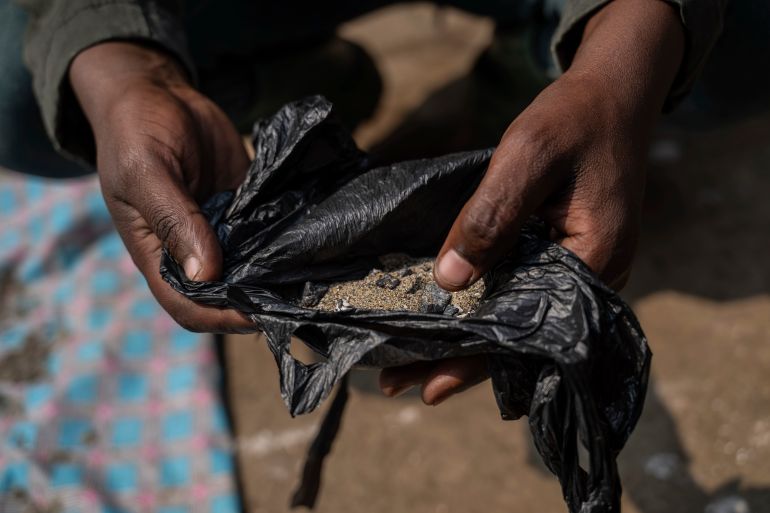
A miner holds newly extracted coltan ore in Rubaya, the Democratic Republic of the Congo [File: Moses Sawasawa/AP]

‘They said: please come and take our minerals’

With large deposits of cobalt and lithium – which are essential for electric vehicle batteries and renewable technologies – the Congolese authorities are promoting the DRC as a solution for the energy transition.

The US has shown interest, including directly linking security guarantees to resource extraction when it mediated the signing of a peace deal between conflict-prone neighbours DRC and Rwanda last year.

“I actually stopped the war with Congo and Rwanda,” Trump claimed in December. “And they said to me, ‘Please, please, we would love you to come and take our minerals.’ Which we’ll do.”

Koko Buroko Gloire, a Congolese international affairs commentator based in Kenya, doubts the DRC will gain anything solid from the deal with the US. The market for critical minerals, he believes, is attracting the “covetousness” of major world powers who are lining up for an “increasingly geopolitical” battle.

But at the end of the day, for the DRC, Koko says the benefits – or lack of them – will depend on the will of the Congolese leadership.

“If this deal will allow us, the Congolese people, to have roads from point A to point B, to have clean water, to have hospitals, to have water, I think it’s a good deal,” he told Al Jazeera, urging Congolese leaders to make sure the DRC does not come out empty-handed.

Before Trump came to office, former US President Joe Biden visited the region, in part to discuss the Lobito Corridor railway infrastructure project, which is currently in disrepair in DRC but will connect the country’s mining provinces to Angola, along the Atlantic Coast – a key port for the export of minerals from Africa to the US.

According to satellite image analysis carried out by Global Witness, up to 6,500 people could be affected by displacement linked to the development of the Lobito corridor in the DRC.

The campaign group said it conducted interviews with different social groups last year in DRC’s Kolwezi, and also visited the railway tracks that will be cleared during the rehabilitation.

It said it had found that the railway line runs through vulnerable communities that have benefitted little from the mining boom in Kolwezi, highlighting a “complex” legal situation where the status of houses and buildings along the railway line was disputed, as was the size of the area to be cleared.

For Global Witness, the Lobito corridor will be a “litmus test” for Western partners who claim that the project represents a more equitable model for resource exploitation.

Congo
Miners work at the D4 Gakombe coltan mining quarry in Rubaya, DRC [File: Moses Sawasawa/AP]

Local communities ‘negatively’ affected

Gentil Mulume, 35, is an activist in Goma, working on matters of transparency and good governance. He emphasises that the Washington meeting is not a dinner party but a call to demonstrate seriousness, particularly with regard to compliance with environmental standards, transparency in mining governance, and industrialisation.

He believes the importance of a mining agreement between the DRC and the US cannot be assessed solely in terms of its geopolitical or international economic significance.

“This type of agreement risks continuing structurally unbalanced partnerships in which the DRC remains a mere supplier of strategic raw materials for the benefit of Western powers,” he suggests.

John Katikomo, a Congolese environmental activist, says the foundations for a fair partnership between the DRC and the US are already off to a bad start, as the deal is “opaque” and authorities in Kinshasa have not disclosed details to citizens.

“Many people are misinformed, and there is poor distribution of resources in relation to these critical minerals. Will the population benefit from this?” he asked.

For Kuda Manjonjo, a Just Transition adviser with PowerShift Africa, a think tank based in Kenya, Africa holds a disproportionate share of the critical minerals essential to the energy transition, but remains marginalised in global value chains.

“This disparity reflects an unfair exploitation model that hinders local development,” he said, stressing the importance of rebalancing the situation, calling for fairer governance, local investment in mineral processing and transformation, and better African representation in strategic decisions on these resources.

Another resident of Goma, Daniel Mukamba, accused many multinationals of seeking to keep countries that are rich in natural resources burdened by the “resource curse” – which he believes becomes a “cancer” that is difficult to cure.

“If you look at the examples of Walikale and Rubaya, these are cities that produce a lot of minerals, including coltan, gold, cassiterite, and tourmaline, but the population remains poor,” Mukamba told Al Jazeera.

Both these resource-rich eastern cities are now held by the Rwanda-backed M23 rebel group, which seized control of much of the east of the country last year.

A January report published by the Global Initiative Against Transnational Organized Crime indicates that in South Kivu province in the east, opaque gold supply chains continue to be linked to conflict, human rights violations, and environmental damage.

Congo
US President Donald Trump shakes hands with President of the Democratic Republic of the Congo Felix Tshisekedi during a signing ceremony at the United States Institute of Peace in Washington, DC, December 4, 2025 [Kevin Lamarque/Reuters]

War means illegal exploitation of resources

Despite the US-brokered peace deal between DRC and Rwanda and a separate one brokered by Qatar between DRC and the M23 rebel alliance, fighting continues in eastern DRC and has approached regions rich in critical minerals.

In December, M23 seized the city of Uvira, some 300km (190 miles) from the lithium-rich province of Tanganyika. Although they have since withdrawn, several observers say there are clashes not far from Tanganyika province.

Many fear that increasing fighting could cause the risk of “uncoordinated” exploitation of mineral resources and are calling for a rapid resolution to the conflict.

“When there is war, there is illegal exploitation of our minerals,” said Chirac Issa, an environmental activist based in Tanganyika province. “There is no government order to regulate the work of miners. From an environmental standpoint, we fear that uncontrolled mining could contribute to pollution and endanger ecosystems.”

After the “resources-for-security” US-brokered deal with Rwanda was first reached in June, Congolese President Tshisekedi was optimistic about it, saying it aimed to “promote our strategic minerals, particularly copper, cobalt, and lithium, in a sovereign manner”, while “ensuring a more equitable distribution of economic benefits for the Congolese people”.

He also said it would “pave the way for local transformation, the creation of thousands of jobs, and a new economic model based on sovereignty and national added value”.

Corneille Nangaa, leader of the Alliance Fleuve Congo (AFC) allied with the M23 – which now administers the capitals of North and South Kivu provinces – however, called the mining partnership between the DRC and the US “deeply flawed and unconstitutional”. He said the plan suffers from a lack of transparency and last week criticised the “opacity surrounding the negotiations”. At a news conference in August, he also denounced the “sell-off” of the DRC’s natural resources.

Tshisekedi said last year that “the resources of the Democratic Republic of Congo will never be sold off or handed over to obscure interests,” and that the country “will sell neither its future nor its dignity”.

DRC’s resources, he affirmed, “will benefit the Congolese people above all”.
Emir Sanusi, Obi Of Onitsha, Emir Of Shonga Demand Collective Action Against Domestic Abuse

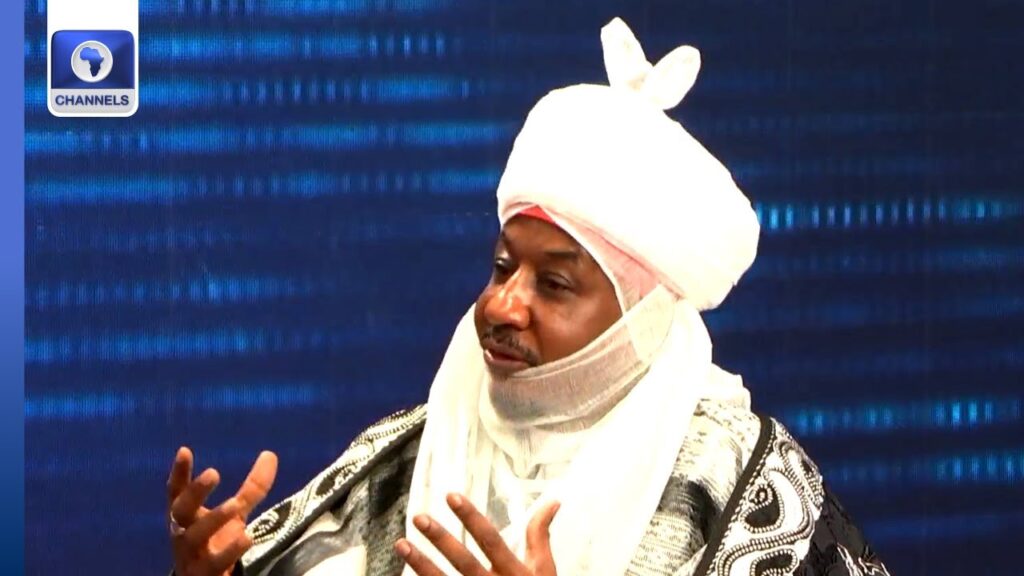
The Emir of Kano, the Obi of Onitsha, and the Emir of Shonga want urgent and collective action to end violence against women and vulnerable groups in the country, declaring that cultural norms cannot justify such acts.

During their joint appearance on Channels Television’s The  Morning Brief on Wednesday, the prominent monarchs said the traditional institution and state owe it a duty to protect this group of persons.

According to the National Bureau of Statistics (NBS) and the UN Women, almost one in three Nigerian women has been assaulted.

Data from the United Nations Childrens’ Education Fund (UNICEF) suggests that there are about 24 million child brides in Nigeria, a crisis the traditional rulers said is being perpetuated under the guise of tradition.

‘Inviolable’ Rights

[embedded content]

The Emir of Kano, Muhammadu Sanusi II, insisted that the rights of women and children are inviolable under the country’s law.

He berated those using culture as a stereotype to abuse the vulnerable.

“We need to first of all see that as a country we have citizens and human beings, and they have rights. Those rights are inviolable. You cannot violate them in the name of a culture. You cannot beat a woman because your culture says you can beat her,” Sanusi, a former governor of the Central Bank, said.

[embedded content]

“She is a Nigerian citizen entitled to protection; it doesn’t matter what you think because these are the values that we live by in this time,” Sanusi said.

Using Culture for Protection

The Obi of Onitsha, Igwe Nnaemeka Alfred Achebe.

Corroborating this, Obi Nnaemeka Alfred Achebe explained that culture is important and should be used to protect the weak in society, rather than intimidate them.

He referenced the Onitsha community, where he said the traditional system has established rules “call to order” anyone targeting vulnerable persons such as widows and physically-challenged people.

“It’s working for us,” the monarch said on the breakfast show.

[embedded content]

“We are using culture to protect not only girls and women, but to protect everybody: the widows, the disabled, the down-and-out, and the unhealthy,” the Obi of Onitsha said.

“It is about coming together within our community, the way we organise, and taking care of each other. We have our rules, regulations, and guidelines; when people act otherwise, the system calls them to order.”

Education is Key

Emir of Shonga, Haliru Ndanusa.

Adding a medical perspective, the Emir of Shonga, Haliru Ndanusa, decried the rising levels of early girl-child marriage. He described it as “very devastating” and highlighted its physical toll on young girls.

The traditional ruler, who likened a pregnant 12-year-old to “a baby carrying a baby,” cautioned that such practices can “damage girls permanently.

“Sometimes they fall together and stand up again, but importantly, she gets damaged,” he said.

He suggested education as one of the most effective instruments to address child-marriage and called on community leaders to “create smart bylaws ourselves” to sanction offenders.

[embedded content]

“When you force them to school, you do many things. So, we can use that instrumentality to get them to marry later because it’s very devastating when they marry early,” the Emir of Shonga said, adding that enlightenment is also critical to addressing the “monster”.

Gunmen kill more than 30 people in Nigeria’s Kwara State: Authorities

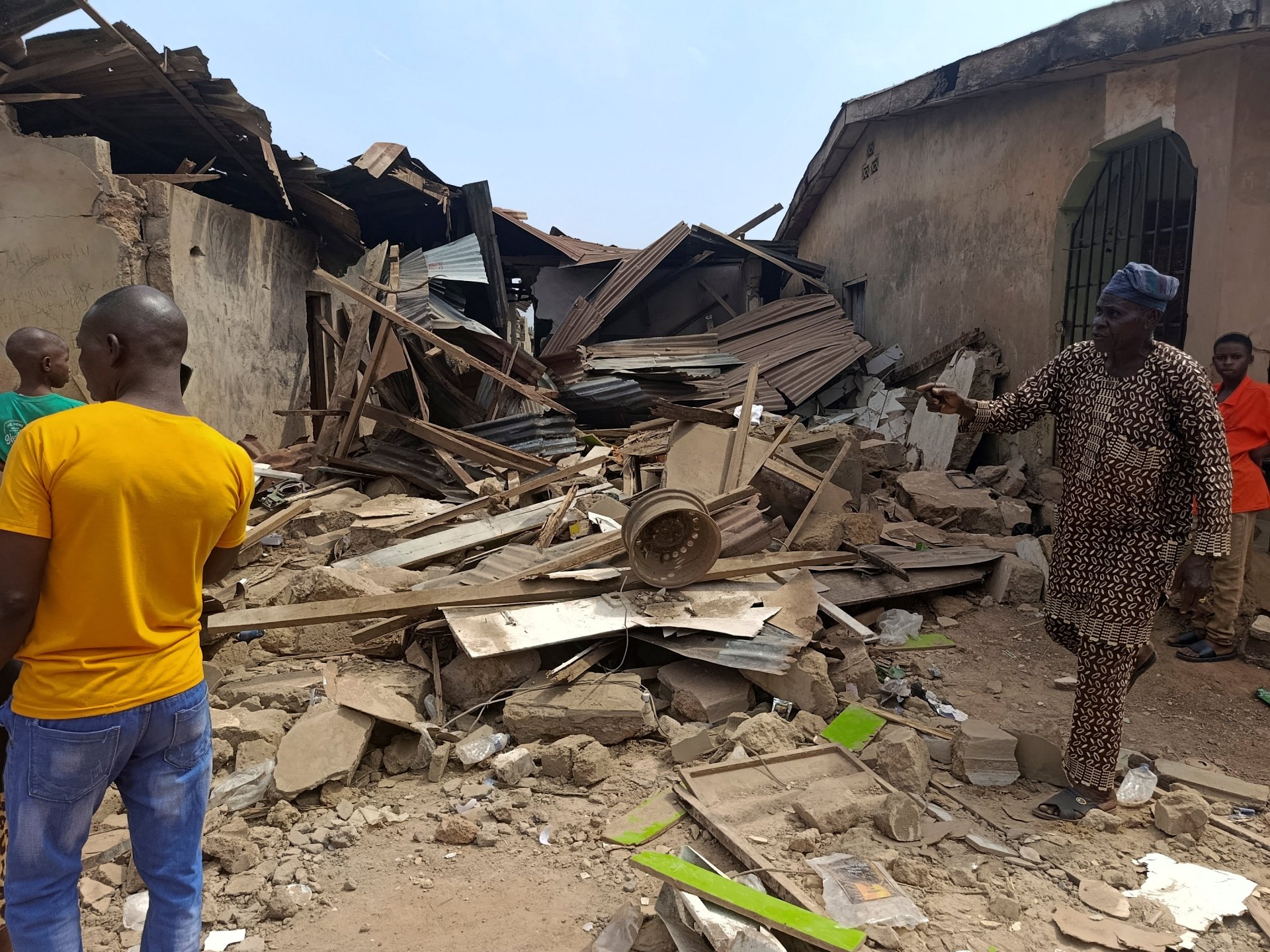
Armed men have killed at least 35 people and burned homes and shops in Woro, a remote village in Nigeria’s north-central Kwara State, authorities said.

“This morning, I was told that 35 to 40 dead bodies were counted,” Sa’idu Baba Ahmed, a local lawmaker in the Kaiama region, told the AFP news agency on Wednesday.

Recommended Stories

list of 1 itemend of list

“Many others escaped into the bush with gunshots,” Ahmed said, adding that more bodies could be found.

It was the deadliest assault ‍this ⁠year in the district bordering Niger State, which armed gangs have attacked increasingly.

Villagers fled into the surrounding bushland as the armed men attacked Woro, Ahmed told ‌the Reuters news agency by phone. Several people were still missing, he said.

The attack was confirmed by police, who did not provide casualty figures. The state government blamed the attack on “terrorist cells”.

Gunmen kill more than 30 people in Nigeria’s Kwara State: Authorities

Armed men have killed at least 35 people and burned homes and shops in Woro, a remote village in Nigeria’s north-central Kwara State, authorities said.

“This morning, I was told that 35 to 40 dead bodies were counted,” Sa’idu Baba Ahmed, a local lawmaker in the Kaiama region, told the AFP news agency on Wednesday.

Recommended Stories

list of 1 itemend of list

“Many others escaped into the bush with gunshots,” Ahmed said, adding that more bodies could be found.

It was the deadliest assault ‍this ⁠year in the district bordering Niger State, which armed gangs have attacked increasingly.

Villagers fled into the surrounding bushland as the armed men attacked Woro, Ahmed told ‌the Reuters news agency by phone. Several people were still missing, he said.

The attack was confirmed by police, who did not provide casualty figures. The state government blamed the attack on “terrorist cells”.

Everton sack Sorensen days after first home WSL win of season

Craig Nelson

BBC Sport Journalist
  • 18 Comments

Everton have sacked manager Brian Sorensen days after their first home win of the Women’s Super League season.

They are fourth from bottom of the table under Sorensen, who was appointed in 2022.

“Sunday’s first win of the season at Goodison Park was important, but it has become evident that a change of direction is necessary to ensure the progression on the pitch we are all striving for,” said Everton CEO Angus Kinnear.

Coaches Stephen Neligan and Ashley Toole have also left the club.

Everton Under-18s coach Scott Phelan, 37, will take charge of the women’s team for the rest of the season.

Women’s first-team coach Jennifer Foster will remain at the club to work alongside Phelan, as will goalkeeping coach Ian McCaldon.

Everton came from behind to claim a 2-1 win over Aston Villa on Sunday thanks to two goals from Martina Fernandez, including an 89th-minute winner.

To play this video you need to enable JavaScript in your browser.

Analysis: ‘Timing of Sorensen sacking comes as a surprise’

Emma Sanders

BBC Sport women’s football news reporter

The timing of Everton’s decision comes as a surprise, just hours after the transfer deadline closed and they added Roma midfielder Zara Kramzar to their ranks.

Sorensen has been involved in recruitment and many of their additions over the past two windows have suited his requests.

But the feeling a change of direction was needed has been lingering at Everton for several months.

Supporters have grown increasingly frustrated by their performances with Sorensen seemingly still unsure on his best XI and often using players out of position.

His experimental style has been effective before and he should be praised for his management last season when Everton’s injury crisis left a thin squad amid a time when the club were awaiting the completion of the Friedkin Group takeover.

However, expectations grew this year when investment came, signings were made and the squad had enough quality to be challenging further up the table.

They have been dragged into an unnecessary relegation battle and Everton have acted now in the hope that they can do enough to stabilise their position before rebuilding in the summer.

Ellen White, Jen Beattie and Ben Haines

Related topics

  • Football
  • Women’s Super League
  • Women’s Football

More on this story

Four Out Of Every 10 Cancer Cases Are Preventable – WHO

image

A global analysis released this week by the World Health Organisation (WHO) says that up to four in every ten new cancer cases could be prevented through changes in behaviour, stronger policies, and public health action.

The findings, published to coincide with World Cancer Day on February 4, 2026, draw on a Nature Medicine study that analysed data from 185 countries and 36 cancer types.

According to the report, about 37% of the 18.7 million new cancer cases in 2022 were linked to modifiable risk factors such as tobacco use, infections, and lifestyle exposures.

“The science is clear,” said Dr Maria Neira, WHO Director of Environment, Climate Change and Health. “A large portion of cancers — particularly those related to tobacco, infections and unhealthy environments — are not inevitable. They are preventable.”

READ ALSO: Health Threat Of Global Plastics Projected To Soar

Tobacco remains the single largest preventable cause of cancer, accounting for roughly 15% of new cases globally, the report shows. Other major contributors include infectious agents such as human papillomavirus (HPV) and Helicobacter pylori, which together make up about 10% of cases.

“Smoking and infection-associated cancers continue to take an enormous toll,” said Dr Elisabete Weiderpass, Director of the International Agency for Research on Cancer (IARC), part of WHO. “Effective prevention is not only possible — it must be prioritised.”

Vaccines, Behaviour Change and Policy Action

One of the starkest examples of preventable disease highlighted in the research is cervical cancer, which is overwhelmingly caused by HPV — a virus for which safe vaccines exist. Similarly, cancers linked to H. pylori infection, which can be treated or prevented through improved sanitation and medical screening, were also prominent.

“We are at a moment where public health interventions — such as HPV vaccination, tobacco control measures, and healthier environmental policies — could save millions of lives,” Dr Weiderpass said.

The WHO analysis also found significant differences in preventable cancer burdens between regions and sexes:
In men, about 45% of cancers were attributable to modifiable factors.

In women, the figure was lower, at around 30%.

Regional estimates varied widely, with areas such as East Asia, Latin America, North Africa and West Asia showing different patterns of preventable risk exposure.

“These differences reflect variation in lifestyles, environmental exposures, and access to preventive care,” said Dr Neira. “This is why tailored, locally relevant strategies are essential.”

Prevention as a Global Priority

The WHO is urging governments and health systems worldwide to scale up proven interventions — from tobacco taxation and public smoking bans to vaccinations and air quality improvements.

“We must shift the focus upstream,” said Dr Neira. “Investing in prevention not only saves lives but reduces long-term health costs and strengthens resilient health systems.”