Archive February 1, 2026

Gaza is on its way to becoming a semi-protectorate, just like Bosnia

When details of the Gaza peace plan were made clear in recent days, it was difficult not to see the parallels with the agreement that ended the war in Bosnia and Herzegovina 30 years ago.

The Gaza plan promises an end to attacks, but it institutionalises endless external control. The designers of this plan promise Palestinians governance based on the “best international standards”. Bosnians have been hearing this phrase for the past three decades. To this day, we still do not know what these standards actually are.

What we do know is that after the implantation of our foreign-negotiated peace plan, Bosnia became a semi-protectorate, a territory governed from the outside in the name of stability and without democratic sovereignty in which those who hold decision-making power cannot be held accountable.

The Dayton Accords, which ended the Bosnian War, were negotiated at a US military base, mediated by foreign diplomats and agreed upon by leaders of the warring parties, including representatives of neighbouring states that had supported the war. Ordinary Bosnian citizens were excluded from the process. The same logic underpins the Gaza plan: peace negotiated about a people, not with them.

The peace agreement reached without us legitimised wartime territorial divisions and created the basis for a highly fragmented political system resembling a confederation: two entities (Republika Srpska and the Federation of Bosnia and Herzegovina) and a weak central state with limited authority alongside a separate district (Brcko).

Nominally, power is exercised by a Council of Ministers and a rotating Presidency composed of three members, each from one of the three dominant ethnic groups. Bosnia and Herzegovina’s Constitution, which should be the basis of governance, was not written by its citizens. It was drafted in English by the same international mediators that brokered the peace and was included in the accords as an annex. Until today, there is no official translation of the document into the local languages.

The Council of Ministers and the Presidency do not hold real power. The international community does. It controls state decision-making through two bodies: the Office of the High Representative (OHR) and the Peace Implementation Council (PIC).

The high representative, which per the rule has to be a European politician, has the authority to impose or annul laws and sack elected officials without them having legal recourse. To this day, Bosnians still do not know what qualifications are required to appoint someone to this position and give them ultimate authority with no accountability.

The PIC, which is made up of 55 representatives of various governments and international organisations, including the Organization for Security and Co-operation in Europe, NATO and the European Union, probably resembles the Gaza Strip’s Board of Peace the most. It oversees the work of the high representative, whose appointments it approves through a process that the citizens of Bosnia still do not really know. Decisions the body makes are driven by the interests of its individual members and communicated to the public through media statements. Nobody has the opportunity to question these decisions and journalists cannot discuss them with PIC members.

The governing bodies being set up for Gaza are similarly detached from accountability. There is the Board of Peace, headed by United States President Donald Trump, where states can buy membership for $1bn. Then there are two executive boards, one composed of US officials and businessmen and another composed of Western and regional officials. They are to supervise local governance, operating above domestic authority while claiming neutrality and expertise. And finally, there is a technocratic administration composed of “qualified Palestinians and international experts” to govern the Strip.

In Bosnia, the system of foreign control is built upon not just the domination of foreign powers but also upon the compliance of local elites. The international community has consistently relied on political actors willing to preserve the status quo in exchange for access to power. This arrangement rewards stagnation and punishes systemic change. It produces a donor-dependent civil society – one that is active and visible, but ultimately manageable from the outside.

It is no wonder that criticism of the international community in Bosnia and its bodies has been framed as a threat to peace. In the past, the OHR has gone as far as silencing certain media organisations that have been openly critical. In 1997, for example, NATO forces were asked to intervene against the public broadcaster of Republika Srpska and cut off its broadcast. The justification was that the OHR wanted to ensure “international norms of professional media conduct” were observed.

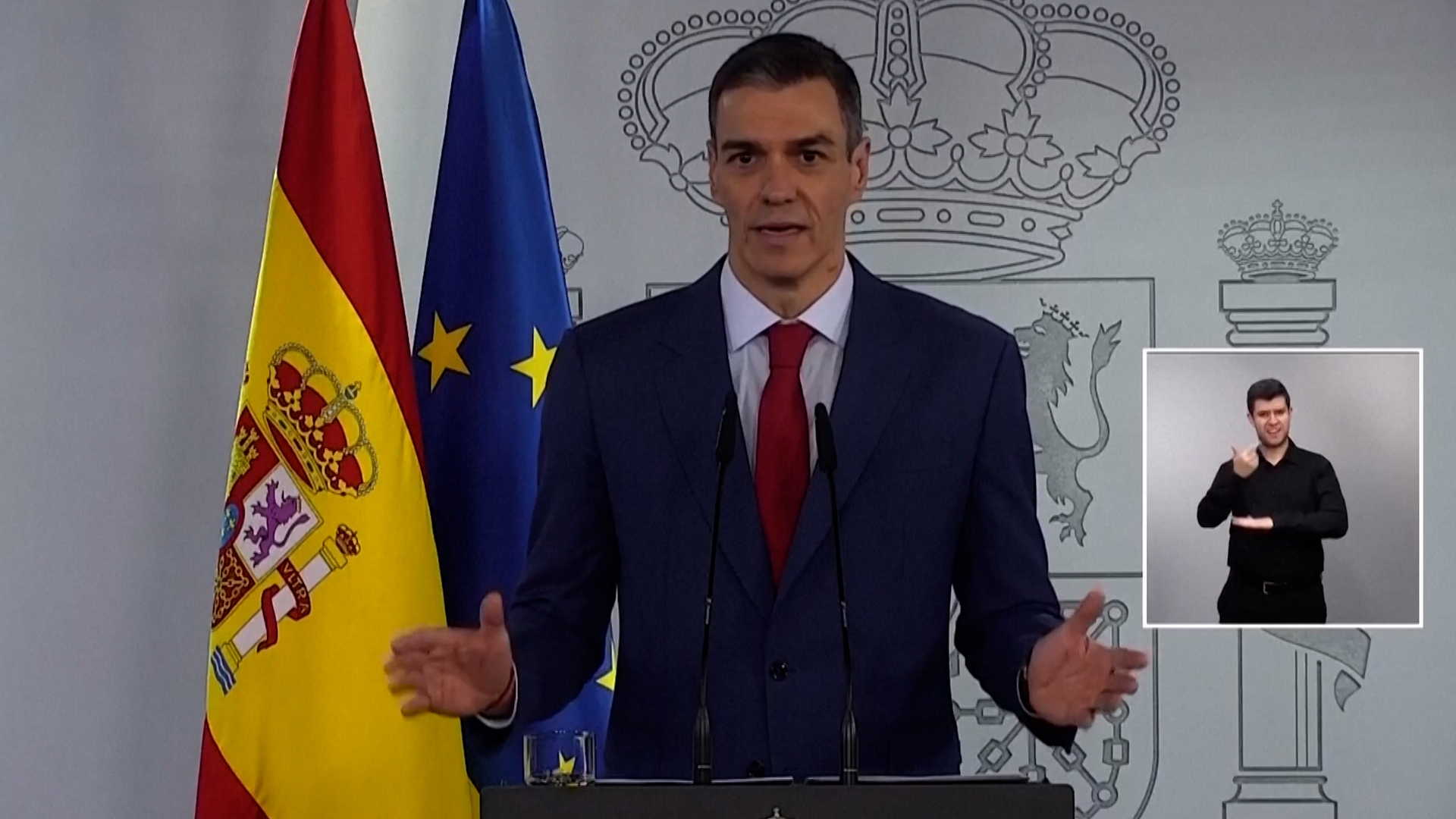
This logic persists today. In a video address in December marking the 30th anniversary of the Dayton Accords, the current high representative, Christian Schmidt of Germany, warned that “some today point the finger at the international community and its representatives, refusing to remember that without international intervention, as late as it came, Bosnia and Herzegovina would have descended into chaos and despair.”

He described Dayton as “the basis for the future” although “not the future itself” and concluded with a vague call for “action” rather than “complaining” without clarifying who should act or how.

Yet Bosnia has not fully succumbed to complacency. There has also been resistance. In 2014, public discontent poured into the streets across the country, beginning in Tuzla and spreading to more than 20 cities within days. Workers led the demonstrations. Citizens occupied public spaces, organised open assemblies and articulated political demands. For a brief moment, people experienced democracy outside the imposed foreign-controlled framework.

The response was repression, silence and disregard. The international community observed but did not engage. When the protests collapsed under political pressure and exhaustion, no institutional change followed.

The protests ceased, but visible traces of them remained in the form of graffiti on government buildings. Probably the most well-known one appears on the facade of the Sarajevo Canton building, and it reads: “Those who sow hunger reap wrath.”

What followed was a mass exodus. Close to 500,000 people have left the country since 2014. Many others are waiting for a chance to go. Meanwhile, nationalism, once a wartime ideology, has become a governing tool – used by local elites and tolerated, even stabilised, by the international community.

As feminist authors from Sarajevo Gorana Mlinarević and Nela Porobić wrote in their publication Peace That Is Not, peace “neither starts nor ends with the signing of a peace agreement”. They argued that the imposed peace in Bosnia has burdened its political, economic and social life for decades. The same burden now looms over Gaza.

If asked whether the Bosnian peace agreement was a success, most people in Bosnia would answer that it put an end to the war. That is true. But peace that merely stops violence without enabling freedom and dignity is not peace.

Peace imposed from above creates stability without justice and governance without democracy. The Bosnian semi-protectorate stands as a warning, not a model. Peace and democracy cannot exist without the participation of the people or if their will is ignored. Yet this is precisely what the “best international standards” continue to do.

Bosnia cannot be undone. Gaza has to be approached differently and can be if its people and other Palestinians are involved in the process and have the power to decide.

England midfielder Gomes set for Wolves loan

  • 45 Comments

Wolves are set to complete a loan move for Marseille’s England midfielder Angel Gomes.

Talks have been ongoing between the clubs over a return to the Premier League for the former Manchester United player.

Sources are indicating a deal is at an advanced stage over an initial loan that will include an option to buy.

Gomes joined Marseille from Lille in the summer but has not started a Ligue 1 match since November and a decision has been made that he can leave this month.

He has scored four goals in 20 appearances in all competitions for the French club but did not start a Champions League match.

The 25-year-old came through the ranks at Manchester United, where he made 10 senior appearances.

When he made his senior debut – replacing Wayne Rooney as a substitute at 16 years and 263 days old – he became the youngest player to represent Manchester United since Duncan Edwards in 1953.

Related topics

  • Premier League
  • Football
  • Wolverhampton Wanderers
    • 16 June 2025
    Angel Gomes pictured sideways on during a Premier League match

More on this story

  • Molineux
  • Ask Me Anything logo

The Basque derby – the friendliest rivalry in world football?

To play this video you need to enable JavaScript in your browser.

The Basque derby between Athletic Club, based in Bilbao and Real Sociedad, based in San Sebastian, is unlike almost any other rivalry in world football.

Competitive yet respectful, friendly yet fierce, it’s a rivalry that’s not defined by hostility but by a shared identity that transcends the colours worn on match day.

For fans on both sides, this is not just another fixture. It is a celebration of football, culture, and a shared Basque identity. With the two clubs around 60 miles apart on the north-west coast of Spain, rivalry exists, but never at the expense of respect.

This Sunday’s match takes place at San Mames stadium (20:00 GMT), home to Athletic Club, who were beaten 3-2 in November’s reverse at Sociedad.

‘Fans can sit and mix together’

So, why is this derby different?

“It’s the joyful and friendly relationship among fans that makes it so special”, says Gaizka Atxa, an Athletic Club fan and founder of the UK supporters group.

“Although there is a fierce rivalry, the two clubs and their fans treat it with a high level of sportsmanship. We respect each other and have a jolly good time with some fun banter.”

What truly sets this derby apart is what happens off the pitch.

Before kick-off, fans from both teams gather for what’s known in Basque as poteo, traditional pub crawls through the streets of Bilbao or San Sebastian, sharing drinks, laughter, and songs.

“In the stadium, we can all mix and sit together without a problem,” Atxa adds. “That’s something very special.”

Rivalry within families

Families will often have split loyalties to teamsathleticclub

The derby is one of the most important dates on the calendar for Aitor Salinas-Armendariz, another Athletic supporter.

“Having so many away fans in the stands who are often friends and relatives is something unusual in the rest of La Liga,” he explains.

“It’s totally normal to see away fans in the seats in the home stands. They’ll probably have been given the ticket by a home fan’s relative.”

Both sets of supporters see themselves as part of the same Basque community. This shared identity shapes the atmosphere surrounding the derby.

“There is a strong sense of belonging,” Salinas-Armendariz explains. “We feel part of the same community, with common claims and struggles that go beyond what divides us.”

That sense of unity is visible everywhere on match day. Fans sharing the same bars, enjoying the pre-match build-up, and watching the match together.

It’s “a colourful and festive derby” Edu, a Real Sociedad supporter explains.

“Although Athletic has more titles, always drawing on the past, we treat each other as equals,” he says. “In the same group of friends, there are often both Real and Athletic fans. It’s a rivalry between brothers.

“We tease each other, banter a lot, and end up hugging.”

The rivalry lasts only as long as the match itself, says Athletic Club fan Javier.

Football, history and identity

This is the “defining rivalry of Basque football”, according to Athletic Club journalist Benat Gutierrez Parro.

“Although other Basque derbies share some characteristics, none is as intense as Athletic–Real Sociedad,” he says.

The rivalry reflects not only football competition but also the historic relationship between Bilbao and San Sebastian.

Given they are geographically close, the clubs frequently compete for the same talent, a tension heightened by Athletic’s policy of only signing Basque players.

“These are matches where both sides have many players who came up through their youth academies and know exactly what it means to beat one of your biggest rivals”, Gutierrez Parro said.

“Many have also grown up as fans of the teams they are now defending, which means that the level of passion on the pitch is usually high.”

Form, league position, and momentum matter less when pride is at stake.

“The derby always evens the playing field,” Gutierrez Parro says. “It’s not just three points, it can shape the next phase of the season for both teams.”

Despite the intensity, trouble between fans is virtually non-existent.

A poetry battle between the teams

A distinctive feature of derby day is an organised cultural event known as the Bertso Derbia.

Jointly organised by the foundations of both clubs, the event brings together Basque improvisational poets, known as bertsolaris, who compose and perform verses in Euskara, the Basque language.

The performances touch on football rivalry, social issues and local identity, delivered with humour and sharp wit as each side attempts to outdo the other.

A moderator ultimately decides which team has won the competition

The event brings the two teams together and fosters a healthy rivalry between the clubs, according to Athletic Club communities director Johana Ruiz-Olabuenaga.

Related topics

  • European Football
  • Football

‘Hollywood welcome’ – inside a Wrexham transfer window

In the five years since the club went Hollywood, there have been more than 50 players who have signed up to be part of Wrexham’s rise.

That’s quite a few times Ryan Reynolds and Rob Mac have picked up the phone for a personal ‘welcome to Wrexham’.

With promotion to the Premier League the aim, there could yet be more to add to that list before this latest transfer window closes – even after a summer that saw 13 new additions at a cost of around £30m.

While the fees and wages have changed, the process has remained largely the same since Phil Parkinson arrived in north Wales as manager in July 2021.

    • 18 hours ago
    • 4 days ago

The board meeting

For a club that has managed to market itself to a huge global audience ever since the documentary cameras rolled into north Wales, it’s not surprising to learn that communication is key when it comes to their transfer business.

And that includes an early spelling out of what Wrexham want to achieve in a transfer window – and how much it could cost.

While manager Parkinson keeps a constant eye on potential signings, the parameters for the window are set in a board meeting which will include Reynolds and Mac, as well as minority shareholder and executive director Kaleen Allyn.

Although the day-to-day operations at the club is handled by those on the ground, the US-based ownership plays an active role in these discussions as chief executive Michael Williamson sets out what could be possible in the market, what different approaches could achieve and the financial implications.

The transfer committee

Ryan Reynolds, Humphrey Ker, Fleur Robinson, Shaun Harvey, Les Reed and Rob McElhenneyGetty Images

It is not the end of the owners’ involvement, they remain interested and invested throughout the process.

But one of the success stories of the takeover has been the celebrity pair knowing their own limits – and placing trust in the expertise of others.

That very much includes Parkinson who draws up his list of targets, working closely with assistant Steve Parkin and scout Chris Johnson.

The budget from the board meeting gives Parkinson an idea of what he is working with as they move towards the window.

But while the final say on who ends up coming through the doors at Stok Cae Ras is always with the manager, support and scrutiny comes in the form of a transfer committee.

Parkinson is joined by Williamson, as well as directors Humphrey Ker and Shaun Harvey.

Then there is former FA technical director Les Reed. The one-time Charlton Athletic manager was a key decision-maker at Southampton as they went from League One to the Premier League, a period where the club won praise for the recruitment of players such as Virgil van Dijk and Sadio Mane.

He has been an advisor and consultant from the early days of Reynolds and Mac’s time, even helping identify Parkinson as their choice for manager.

The five together make sure there is a collective responsibility on the approach and, crucially, if the moves are right for the club.

The due dilligence

A mural of Phil Parkinson painted on a fence outside the Cae RasGetty Images

The biggest test is conducted by the manager.

While Reed has previously spoken of the use of data and AI systems to help identify players, there is also a traditional touch as Parkinson narrows down his options.

“He likes to spin a few plates,” says former captain Ben Tozer, one of the first significant signings under Parkinson after he dropped down two divisions to join Wrexham in 2021.

“He might have two or three players in his thoughts for that position so he was probably speaking to others when he was speaking with me.

“We had three or four conversations. You don’t realise it, but part of it is him sussing you out and if you’re going to be the right person to go into that dressing room. He just knows how to sniff out the right people.”

Having the right character is a huge factor for Parkinson – paying off with three successive promotions – and various contacts in the game are sounded out to double check that the potential newcomer will fit into the dressing room ethos.

As Parkinson puts it: “It’s about selecting the players we’d like and then can we get a deal done? Over the years we’ve been pretty good at that.

The Hollywood touch

Ryan Reynolds, Steve Fletcher and Rob Mac pose for a selfieRex Features

Once it’s decided to make a move, the leg work in delivering the deal is left with the experienced Harvey, and also Williamson involved in negotiations, making sure the finances work.

But all the while, the Hollywood duo are kept informed. Insiders say they will often be directly on the phone to Parkinson or the exec team – not to suggest who to sign but with a genuine excitement about what the new player will offer.

They will also offer to see if there is anything they can do to help a deal over the line. Previously players such as Steven Fletcher have discussed how a phone call from one of the red carpet stars during negotiations helped convince him to sign.

Tozer admits the early days needed a selling job for players to drop down, with Parkinson himself having to be initially reassured that the ambitions were real.

The welcome to Wrexham

The process is a flexible one and not guaranteed to run smooth or go to plan.

Speaking after the summer window, Harvey admitted to the Fearless in Devotion podcast that the market proved more competitive than anticipated, resulting in a reassessment over budgets.

But there is always a clarity over what they want to achieve, a blueprint that has kept momentum, and a tradition of the owners reaching out to new signings to welcome them on board.

“They’re hands on, they make you feel welcome, look after you and touch base when they can,” explains midfielder George Thomason, a summer signing from Bolton.

“Obviously they’re really busy people and they’ve got a lot going on, so when they can make time for us then it’s always appreciated.”

Then there’s just the small matter of getting used to the club with cameras documenting every step along their ambitious journey.

“I remember having signed all the contracts electronically but when I got to the club there was another bit of paper to sign that was basically about the documentary,” Tozer says.

Related topics

  • Welsh Football
  • Wrexham
  • Championship
  • Football

More on this story

  • Wrexham scarves

Yamal scores as Barcelona win at Elche to extend La Liga lead

Lamine ‌Yamal scored one goal and created another as Barcelona extended their lead at the ‍top of La Liga with a 3-1 victory over Elche on Saturday.

Barcelona moved to 55 points from 22 matches, four ahead of Real Madrid, who have a game in hand. Elche remained in 12th place with 24 points from 22 games.

Recommended Stories

list of 3 itemsend of list

Yamal opened the scoring for the visitors ⁠before Alvaro Rodriguez equalised for Elche in an end-to-end first half.

Ferran Torres and Marcus Rashford struck ​to complete the win, sparing the blushes of wasteful Barca, who had 30 efforts ‍on goal in the match.

“We got three more points. We continue to grow as a team. We haven’t reached our peak yet,” Barcelona midfielder Frenkie de Jong said.

“We usually have people who finish well. There are times ‍when they fail. ⁠The important thing is that we have them [chances].”

Lamine Yamal in action.
Yamal scores the opening goal against Elche [Jose Breton/AP Photo]

Yamal sets the tone

Barcelona took the lead within six minutes when Dani Olmo played Yamal through on goal, and the 18-year-old rounded goalkeeper Inaki Pena to score his 13th goal of the season in all competitions.

Olmo struck a shot against the crossbar midway through the first half, and within a minute, Elche were level.

German Valera slipped former Real Madrid forward Rodriguez in behind the Barcelona defence, and he raced clear to score.

The visitors should have retaken the lead when Torres struck ‌the crossbar again from six yards out with a poor miss. The ball rebounded to him, and he then steered it against the post in a comical sequence of play.

Torres got his goal in 40 minutes when de Jong found space in the box and, rather than shoot himself, laid the ball back for the forward to fire into the roof ‌of the net from 15 yards.

It should have been 3-1 ⁠minutes later when Fermin Lopez somehow skied the ball over the crossbar from six yards with the goal gaping.

Barcelona continued to create chances in the second half, with substitute Rashford guilty of a poor miss when he put his shot wide ‌with just the goalkeeper to beat.

Rashford got his goal in 72 minutes, however, when Yamal’s low cross was not cleared by the Elche defence, allowing the England forward to blast the ball ‍into the roof of the net from close range.