Archive March 5, 2026

Man City close in on Anderson – Friday’s gossip

Manchester City are closing in on a deal for Elliot Anderson, several Premier League clubs are interested in Fulham‘s Samuel Amissah, and Liverpool have identified Yan Diomande as a replacement for Mohamed Salah.

Manchester City are close to completing a deal to sign England midfielder Elliot Anderson from Nottingham Forest. (Teamtalk)

Anderson favours a move to City over neighbours Manchester United, but Nottingham Forest value the 23-year-old at more than £70m. (Talksport)

Arsenal, Manchester United and Chelsea are set to battle to sign England Under-19 centre-back Samuel Amissah, 18, from Fulham. (Telegraph – subscription required)

Liverpool want 19-year-old Yan Diomande to replace Mohamed Salah on the right wing and the RB Leipzig winger could cost them £87m. (Teamtalk)

Former Spurs boss Mauricio Pochettino and Roberto de Zerbi are Tottenham‘s top managerial targets this summer – however former player Robbie Keane, now in charge of Ferencvaros, could be considered if they are relegated to the Championship. (GiveMeSport)

Arne Slot’s position as Liverpool boss is set to come under significant scrutiny at the end of the season, with former Real Madrid coach Xabi Alonso the only manager the club’s owners want to succeed the Dutchman. (Teamtalk)

Ecuador defender Piero Hincapie, 24, will join Arsenal on a permanent transfer from Bayer Leverkusen at the end of this season. (Sun)

The Gunners will need to sell a first-team player this summer, with Norway midfielder Martin Odegaard, 27, and Brazil winger Gabriel Martinelli, 24, among the potential candidates. (Telegraph – subscription required)

Manchester United plan to hold contract talks with Portugal midfielder Bruno Fernandes, 31, after this summer’s World Cup. (Football Insider)

Related topics

  • European Football
  • Premier League
  • Football

More on this story

    • 17 October 2025
  • Quiz logo

Nepal Awaits Results In Key Election Since Gen Z Uprising For Change

Nepal voted on Thursday for a new parliament in a high-stakes showdown between an entrenched old guard and a powerful youth movement, six months after deadly anti-corruption protests toppled the government.

READ ALSO: Death Toll In Nepal Protests Rises To 72

Key figures contesting for power include the Marxist former prime minister seeking a return to office, a rapper-turned-mayor bidding for the youth vote, and the newly elected leader of the powerful Nepali Congress party.

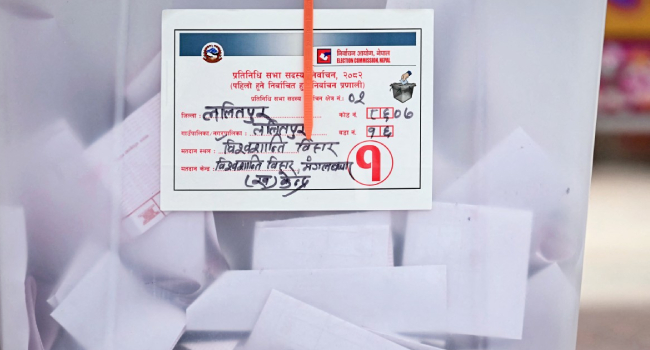
Election commission officials collected ballot boxes after voting closed, with papers taken under guard to centres before counting.

“The voting process has been concluded peacefully and enthusiastically,” Chief Election Commissioner Ram Prasad Bhandari told reporters, saying turnout had been around 60 per cent according to initial estimates.

Some winners are expected to be published as early as Friday, but full results may take several days.

It may then take time before a government is formed if, as many analysts expect, no party wins an outright majority.

“Nepalis have been waiting for change for so long, from one system to another,” said Nilanta Shakya, 60, a retired engineer, who was among the first to vote at a college in the capital, Kathmandu.

“I hope there is a meaningful change this time,” she added.

Voters have chosen who replaces the interim government in place since the September 2025 uprising, in which at least 77 people were killed, and parliament and scores of government buildings were torched.

Youth-led protests under a loose Gen Z banner began as a demonstration against a brief social media ban, but were fed by wider grievances at corruption and a woeful economy.

Sushila Karki, the interim prime minister, said the vote was critical in “determining our future”.

The polls are one of the most hotly contested elections in the Himalayan republic of 30 million people since the end of a civil war in 2006.

Thousands of soldiers and police have been deployed.

The election saw a wave of younger candidates promising to tackle Nepal’s dismal economy, challenging veteran politicians who have dominated for decades and argue that their experience guarantees stability and security.

“Today feels like a day of celebration,” said Nirmala Bhandari, 50, a housewife, who danced in the street with friends for a video for social media, after casting her vote in Bhaktapur district outside the capital.

“I am hopeful that the country will get new leaders and that we will build a better nation,” she added.

‘Blood Will Bring Change’

Helicopters will be used to collect ballot boxes from snowbound mountain regions across Nepal, home to eight of the world’s 10 highest peaks, including Mount Everest.

But all eyes will be focused on the hot farming plains south of Kathmandu, where all three prime ministerial hopefuls contested seats — a departure from past elections that focused on the capital.

KP Sharma Oli, the 74-year-old Marxist leader ousted as prime minister last year and seeking a return to power, was challenged in the usually sleepy eastern district of Jhapa by former Kathmandu mayor Balendra Shah, a 35-year-old rapper-turned-politician.

“This election must reestablish democracy and contribute to end non-political, anarchic and violent tendencies,” Oli said after voting, insisting his party would win the largest number of seats.

The Jhapa-5 constituency, with around 163,000 voters, will determine whether Oli secures his seat or whether Shah enters parliament.

Shah, from the centrist Rastriya Swatantra Party (RSP), who queued to vote in Kathmandu dressed in a black suit and sunglasses, has cast himself as a symbol of youth-driven political change.

Also in the race as aspiring prime minister is Gagan Thapa, 49, the new head of the country’s oldest party, Nepali Congress, who has said he wants to end the “old age” club of revolving veteran leaders.

After casting his ballot, Thapa told AFP that it is “the duty of the leaders” not to let the events of last September occur again.

On social media, voters shared images of their ink-marked thumbs — alongside photographs of the September protests.

“At the Gen Z protest, people died — and their blood will bring change, we hope,” said Tek Bahadur Aale, 66, who voted in Jhapa.

“We hope a government with good governance, no corruption, comes this time.”

More than 3,400 candidates are running for 165 seats in direct elections to the 275-member House of Representatives, the lower chamber of parliament, with 110 more chosen via party lists.

Trump voices support for possible Kurdish offensive in Iran

Donald Trump has expressed public support for a possible Kurdish offensive against Iran as the United States pushes to destabilise the Iranian governing system internally.

“I think it’s wonderful that they want to do that, I’d be all for it,” the US president told the Reuters news agency on Thursday when asked about the prospects of a Kurdish rebellion in Iran.

Recommended Stories

list of 3 itemsend of list

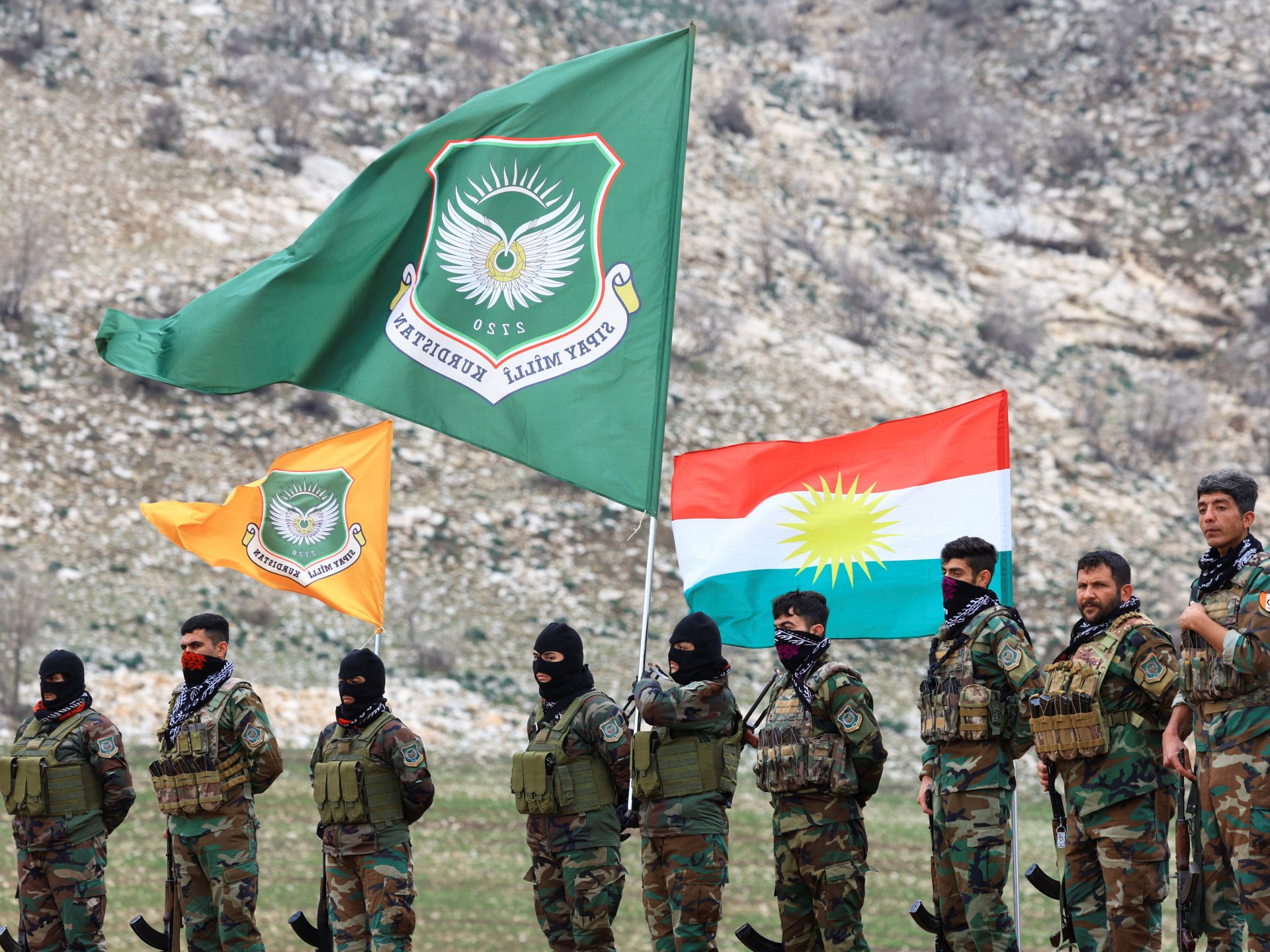
Several US media outlets have reported that Trump called leaders in the semi-autonomous Kurdish region of Iraq to enable Iranian Kurdish groups launch a ground offensive inside Iran.

In his comments on Thursday, Trump declined to say whether the US would provide air support for Kurdish rebels.

The White House had confirmed that the US president contacted Kurdish leaders in Iraq but denied that Trump agreed to a plan to push for an armed uprising by the Kurds in Iran.

“The president has held many calls with partners, allies and leaders in the region, in the Middle East,” Karoline Leavitt told reporters on Wednesday.

“He did speak to Kurdish leaders with respect to our base that we have in northern Iraq.”

US assets in Erbil in the Kurdish region of Iraq have come under repeated Iranian drone and missile attacks since the war started.

Iran is home to millions of Kurds, mostly living in the west of the country.

Kurds represent a sizable ethnic minority in Iraq, Syria and Turkiye, as well.

Earlier this week, Mustafa Hijri, head of the Democratic Party of Iranian Kurdistan (PDKI), a prominent Kurdish opposition group, called for desertion from the Iranian army and Islamic Revolutionary Guard Corps (IRGC).

“I call upon all aware and freedom-seeking soldiers and personnel across Iran, and especially in Kurdistan, to abandon the barracks and military centres of the IRGC, the army, and other military forces of the regime, to refuse their assigned duties, and to return to the embrace of their families,” Hijri wrote on X.

“This action is important both for preserving their lives in the face of these attacks and as a sign of turning their backs on the regime’s military and repressive forces.”

On several occasions in recent decades, Washington has urged Kurdish groups seeking autonomy to rebel against governments it viewed as hostile in the region, only to cut off support to them or fail to come to their aid when the political situation changes.

Some critics have warned that stoking ethnic tensions in Iran could lead to a civil war that could further destabilise the entire region.

On Wednesday, Iran’s Press TV reported that the IRGC launched missiles and drones at the headquarters of “anti-Iran terrorist groups in the Iraqi Kurdistan region”.

The Kurdistan Regional Government (KRG) in Iraq has condemned the Iranian attacks on the region while also “categorically denying reports of playing a role in an offensive against Iran.

“At the same time, the Kurdistan Regional Government and the political parties within it are not part of any campaign to expand the war and tensions in the region,” the KRG said in a statement. “On the contrary, we call for peace and stability in the region.”

But with government troops showing no signs of defection despite thousands of US and Israeli strikes, the Trump administration has struggled to find a prominent friendly force on the ground in Iran.

Israel cancels Friday prayers at Al-Aqsa Mosque amid Iran conflict

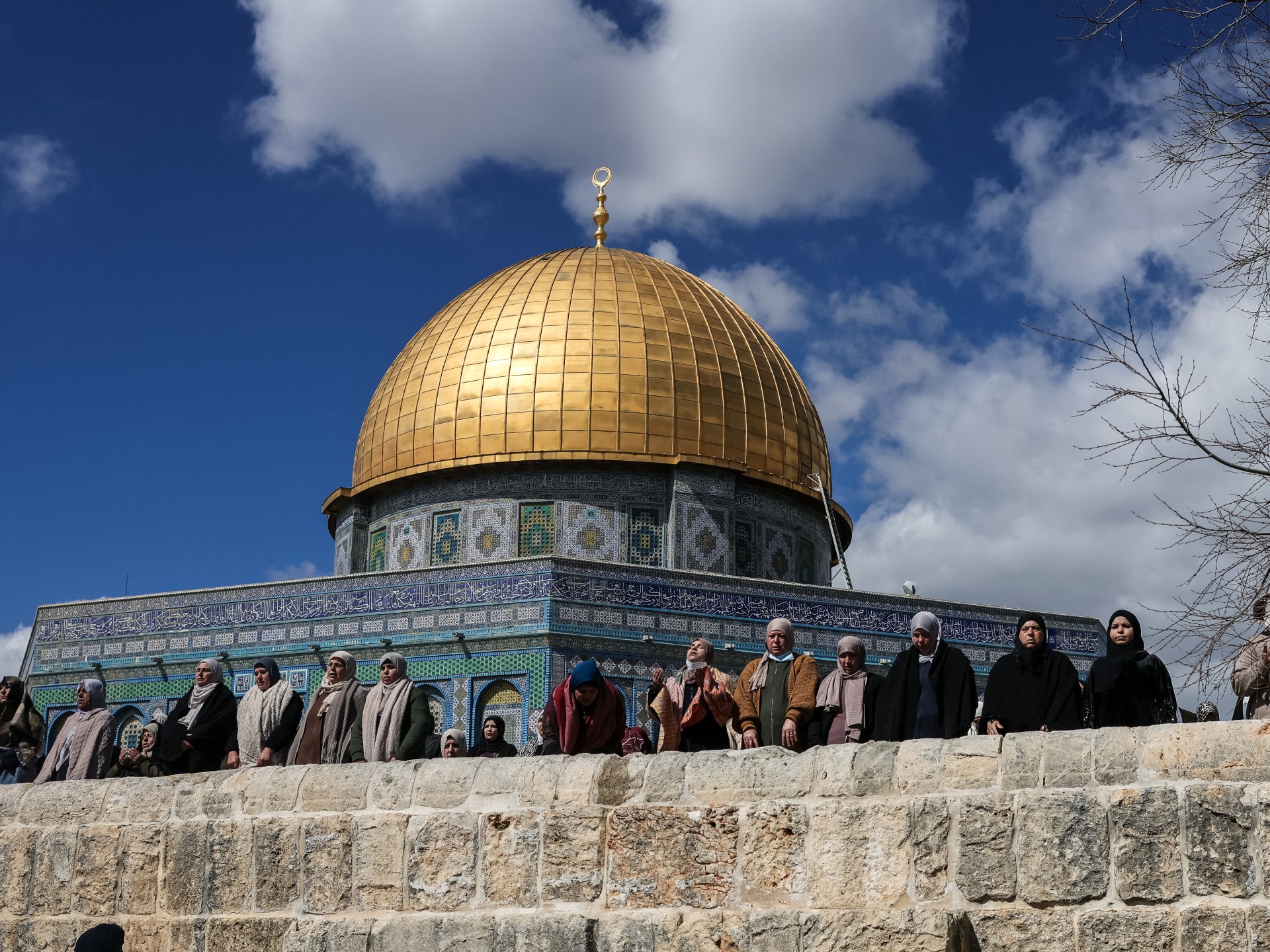
Israel’s Civil Administration has cancelled Friday prayers at the Al-Aqsa Mosque in occupied East Jerusalem, the latest in a series of Israeli restrictions imposed at Islam’s third-holiest site since the start of the Muslim holy month of Ramadan.

Civil Administration Chief Brigadier General Hisham Ibrahim said on Thursday via the Israeli army’s Al Munasiq platform that the decision was taken in light of Iran launching retaliatory strikes at “Israel and the entire region”.

Recommended Stories

list of 4 itemsend of list

Israel and its close ally, the United States, launched a military offensive on Iran on Saturday, as the mediator of talks between the countries, Oman, said a deal was “within reach” after Tehran had agreed to never stockpile the enriched uranium required to make a nuclear bomb.

“All holy sites in the Old City of Jerusalem, including the Western Wall, the Temple Mount and the Church of the Holy Sepulchre, will remain closed tomorrow, and worshippers and visitors of all religions will not be allowed to enter,” said the head of Israel’s governing body in the occupied West Bank.

Retaliatory Iranian missile strikes have so far killed 10 people in Israel, while at least 1,230 people have been killed in Israeli and US attacks.

Since the start of the US-Israel war on Iran, Israeli authorities have barred access to the Old City for anyone other than residents or shop owners.

Sheikh Ikrima Sabri, a senior imam at Al-Aqsa, has slammed Israel’s continued closure of Islam’s third-holiest site.

“The occupation authorities are exploiting any occasion to close Al-Aqsa, and this is completely unjustified,” he told Al Jazeera on Sunday.

Nevertheless, the imposition of Israeli restrictions predates the beginning of the war.

Last month, Israeli authorities announced that no more than 10,000 Palestinians from the occupied West Bank would be permitted to enter the mosque compound for the first Ramadan prayer – only a fraction of the numbers that have traditionally gathered there in previous years. Al-Aqsa can hold up to half a million people.

The Old City is located in occupied East Jerusalem, which Israel occupied in 1967 and later annexed, a move against international law.

Moreover, the site has become a regular target of visits by right-wing Israeli politicians and Israeli settlers, who have stormed the compound on an almost weekly basis and performed religious rituals under the protection of Israeli forces.

Palestinians fear Israeli encroachment upon the holy site has increased, with senior ministers offering prayers at the site.

The Al-Aqsa compound is administered by Jordan, but access to the site itself is controlled by Israeli security forces.

Under the decades-old status quo maintained by Israeli authorities, Jews and other non-Muslims are allowed to visit the compound in occupied East Jerusalem during specified hours, but they are not permitted to pray there or display religious symbols.

GB wheelchair curlers beat Latvia for first Games win

Elizabeth Hudson

BBC Sport journalist

Great Britain defeated Latvia 6-5 to claim their first win in the wheelchair curling mixed doubles event at the Winter Paralympics in Milan-Cortina.

Having been beaten 10-7 by Estonia in Wednesday’s opening game before losing 14-3 in just seven ends to world number ones South Korea on Thursday morning, GB needed a better performance in their second match of the day.

And against the Latvians, who had also lost their first two matches, Jo Butterfield and Jason Kean rallied after their opponents stole one in the opening end.

Butterfield, who is aiming to become the first Briton to win Winter and Summer Paralympic golds – having finished first in the club throw event at Rio 2016 – played a key role with two superb shots either side of the break.

Her last stone of the fourth end enabled a score of two to take a 5-2 lead into the interval, while her final stone of the fifth end resulted in a steal for a 6-2 advantage.

“We enjoyed that one. It is great to get our first win and hopefully we can build some momentum from that,” said Butterfield.

“We played so much better. It was a performance, especially in the first half, that we know we can play. That’s the team we know we can be.

“We actually played better this morning than we did last night, although the scoreline didn’t reflect it. We have been building in every game we have played so far. Tonight we came out even better.”

The Britons had struggled against the Koreans in the earlier match, which fell away in the fourth end with Hyejin Baek and Yongsuk Lee 3-2 up in the match and scoring four with one stone each to play.

Butterfield missed a takeout attempt and Baek sent her final stone into the house to secure a score of five to put them 8-2 ahead.

GB opted to use the powerplay in the fifth end but once again South Korea controlled the end and were able to steal two to leave them 10-2 up and firmly in control.

Although GB pulled one back in the sixth end, the Koreans maintained their dominance with another strong seventh end to add another four and the match was brought to an early conclusion before the scheduled final end.

Related topics

  • Winter Sports
  • Disability Sport

More on this story

    • 1 day ago
    Milano Cortina logo for the Winter Paralympics
    • 3 days ago
    Andrew Simpson skiing

US House of Representatives to vote on latest effort to halt Iran war

The United States House of Representatives is set to vote on a resolution to halt the administration of US President Donald Trump’s military actions against Iran, in the latest test of lawmakers’ positions on the war.

The vote on Thursday comes a day after a vote on a parallel war powers resolution, which failed in the US Senate 47-53, mostly along partisan lines.

Recommended Stories

list of 3 itemsend of list

As in the Senate, Republicans control a slim majority in the House, and any vote to rein in Trump’s actions is all but assured to face an uphill battle.

Still, Thursday’s vote will be significant. The House of Representatives, with 435 seats, was envisioned by the US Constitution as the legislative branch closest to the US public. It is often referred to as the People’s House.

With polls continually showing dismal approval from Trump’s bombing campaign, and figures in Trump’s own “Make America Great Again” (MAGA) base questioning the war’s motivation, a vote will force lawmakers to go on record with their positions, according to Thomas Massie, a Republican sponsoring the resolution.

“They don’t want their name associated with this when it doesn’t turn out well,” Massie said from the House floor during a debate period on Wednesday.

He has joined with mostly Democrats in condemning Trump’s actions as unconstitutional.

Under the US Constitution, only Congress can declare war. Presidents can unilaterally conduct some military actions, but legal scholars have long argued that, under the founding US document, that authority only applies in instances of immediate self-defence of the country.

Lawmakers critical of Trump’s actions have decried the operation launched on Saturday alongside Israel as a “war of choice”, charging the administration has not offered any evidence of an immediate threat.

To be sure, the administration has presented a kaleidoscope of rationales, many that run counter to available evidence.

The administration has pointed to both Iran’s nuclear programme, which Trump has said was “obliterated” in strikes last year, as well as claims Iran sought to develop a ballistic missile programme capable of hitting the US. If Iran did seek to develop such a missile, experts have noted, US intelligence has assessed it would take them until 2035 to achieve that goal.

US Secretary of State Marco Rubio, meanwhile, said earlier this week that Washington’s close ally Israel was planning to strike Iran, which they expected to prompt an Iranian attack on US assets in the Middle East. Trump subsequently said Iran was the one planning to strike Israel.

Across the claims, the administration has said the totality of the Iranian government’s actions since the 1979 Islamic Revolution represented an immediate threat that previous US administrations had failed to address.

‘Constitutional right to exercise its authority’

Speaking ahead of the failed vote in the Senate on Friday, Democratic minority leader Chuck Schumer said following classified briefings and public statements, he increasingly feared the prospect of the US putting boots on the ground.

“He picks one plan one day, then he picks the total opposite the next. He doesn’t think it through, he doesn’t check the facts,” Schumer said, referring to Trump.

“He is surrounded by ‘yes’ men; this is dangerous,” he said.

As of Thursday, fighting continued across the Middle East, with the US and Israel repeatedly striking Iran, and Iran launching its latest wave of attacks across the Gulf. Recent strikes have extended as far as Turkiye and Azerbaijan.

At least 1,230 people have been killed in Iran since Saturday, while 11 were killed in Israel and nine in Gulf states. Six US soldiers were also killed.

As underscored in Wednesday’s Senate vote, Republicans have largely rallied behind Trump’s campaign or offered tacit support, including praise for the killing of Iran’s supreme leader, Ayatollah Ali Khamenei.

House Speaker Mike Johnson, the top Republican in the chamber, has warned it would be “dangerous” to force an end to the military campaign.

On Wednesday, he pointed to Congress’s “constitutional right to exercise its oversight authority”.

“But we also have a duty and obligation not to undercut our own national security,” he said.

Several Republicans have expressed confidence that Trump will swiftly end the war and, in turn, help reduce political fallout over contradictions with Trump’s anti-interventionist campaign pledges.

Under the 1973 War Powers Act, presidents have 60 days, with a possible 90-day extension, to obtain congressional approval to continue military actions, regardless of their initial justification.

Vote expected to be close

Republicans currently control 218 seats in the House to Democrats 214, with three seats remaining vacant.

The vote is expected to be close, with the top Democrat in the House, Hakeem Jeffries, predicting wide support across the party.

However, a handful of Democrats have indicated they could oppose the resolution, including Representative Josh Gottheimer, a top defender of Israel.

Beyond Massie, at least one Republican, Representative Warren Davidson, has committed to voting in favour of reining in Trump.

If the resolution passes with a simple majority, it would need to be brought to another vote in the Senate before it is sent to Trump’s desk. He could then veto it, and both chambers of Congress would need a two-thirds majority to override it.

A small group of Democrats has separately proposed a different war powers resolution that would allow the president to continue the war for 30 days before seeking congressional approval.