Archive February 2, 2026

Six Nations preview & BBC pundit predictions

Last year’s Six Nations featured more tries than any previous championship, with 101 scored across 15 matches.

Champions France ended the tournament with 30 of them – the most in a single Six Nations campaign – and Les Bleus wing Louis Bielle-Biarrey’s eight tries broke the record for most in a single Six Nations campaign.

This year’s campaign has the potential to be as tight as ever, and promises to offer similar entertainment value.

France

France won the Six Nations last year, with their sole defeat against England at Allianz Stadium.

Captain Antoine Dupont ruptured cruciate ligaments in his knee in round four against Ireland but Fabien Galthie’s side got over the line without their talisman.

The scrum-half is back and will want to remind the rugby world of what he can do on the biggest stage, but they are without prop Uini Atonio, who has been forced to retire with a heart problem.

“I tried to get a good part of the injury off and spend it with my family and friends, so I can do other things and come back with more mental freshness,” Dupont told BBC Radio 5 Live.

Galthie showed that no player is safe in his squad by leaving out France’s all-time top try-scorer Damian Penaud, number eight Gregory Alldritt and veteran centre Gael Fickou.

Will that bold call pay off? The fixtures could aid their chances, with games against Ireland and England at home meaning Les Bleus have a strong chance of retaining their title.

“France have threats all over the park. How they differ from any other team in the Six Nations would be the fact that if they lose five of their top players, it doesn’t matter,” La Rochelle head coach Ronan O’Gara told BBC Sport.

    • 4 hours ago

England

Steve Borthwick’s side go into the competition as genuine contenders, arguably for the first time in his reign as England head coach.

England last won the competition in 2020 but are on an 11-game winning run.

With their young talent now more settled in Test rugby, it feels like the next step for Borthwick’s squad is to win a title.

Young back rowers Henry Pollock and Guy Pepper have broken into the matchday squad, while Tommy Freeman and Immanuel Feyi-Waboso are backs with real threat.

A potential Grand Slam decider in Paris awaits, with Borthwick openly saying he dares his side to dream of glory.

“The sky is the limit for these players, there’s so much growth in them,” Borthwick told BBC Sport.

Ireland

Having won back-to-back titles in 2023 and 2024, Andy Farrell missed last year’s competition because of his British and Irish Lions commitments.

Ireland did only lose one game to France but have since struggled to regain the form that brought so much success.

Farrell’s squad have a number of injuries in key positions, with their three front-line loosehead props all out.

Fly-half also remains a position under discussion, with Leinster’s Harry Byrne now putting pressure on Sam Prendergast and Jack Crowley.

Games away to France and England are therefore daunting, but it may also be an opportunity for new talent to emerge from a settled group.

“We are hunting again and not being hunted, but that doesn’t mean much,” Farrell told BBC Radio 5 Live.

“It is about what is in front of your face and your preparation. How you can connect as a team and grow.

    • 3 days ago
    • 6 days ago

Scotland

Glasgow’s domestic and European form has brought positivity to Scottish rugby after a mixed autumn campaign.

Despite the undeniable talent available, Gregor Townsend’s side have struggled to deliver consistently in the tournament, finishing fourth two years in a row.

“The expectation is always high for our team,” Townsend said.

“I think on paper it is the best team we have had.”

And Italy (away), England (home) and Wales (away) could be three ideal fixtures to gather early momentum for a title charge.

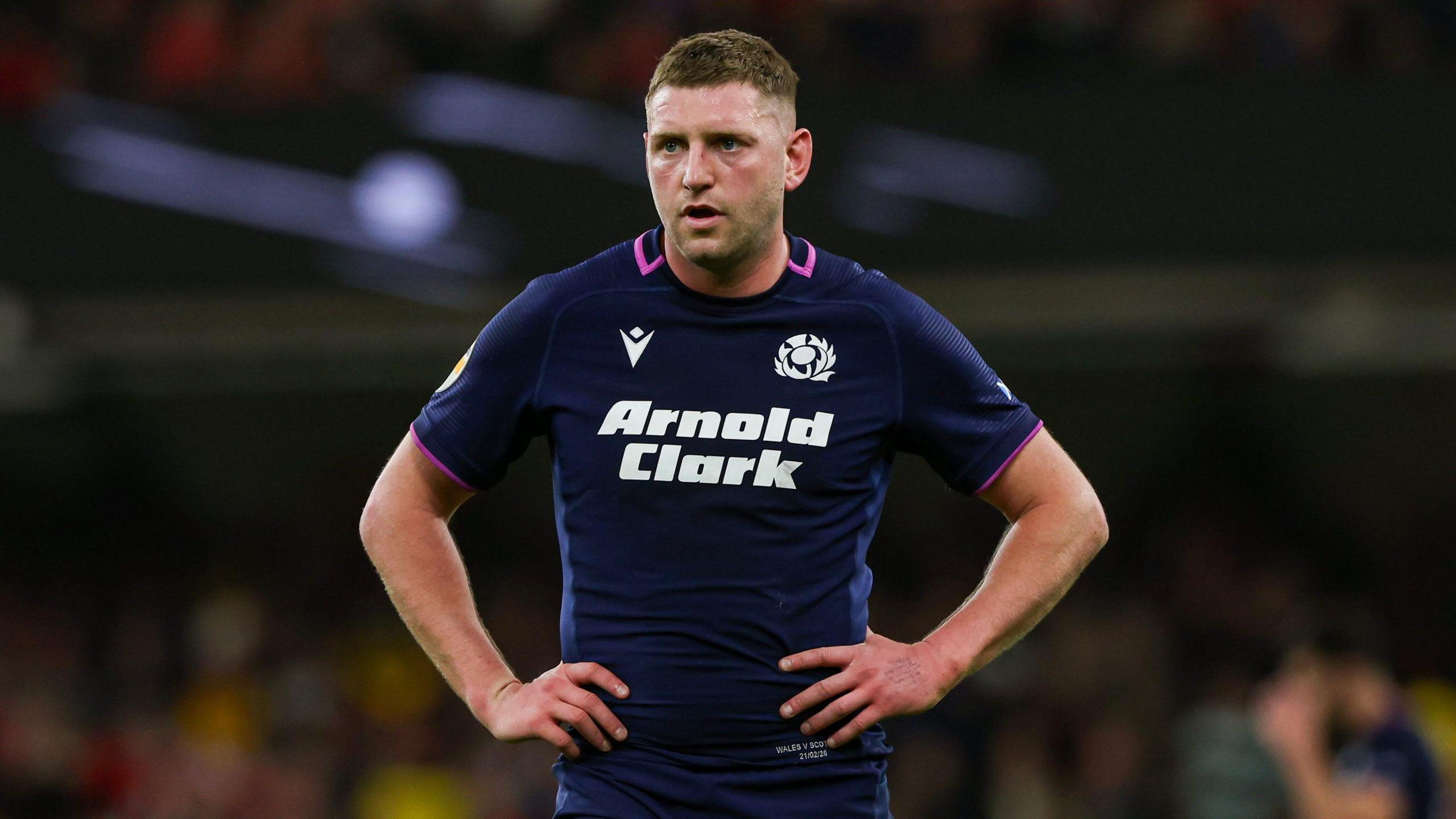
Bath fly-half Finn Russell, 33, enters the tournament on the back of a successful Lions tour and has the quality to push Townsend’s side to new heights.

Captain Sione Tuipulotu – another summer Lion – is back after missing last year’s Six Nations.

“Everyone goes into the tournament to lift the trophy,” he told BBC Sport.

    • 6 days ago

Italy

The days of resting a few key players against Italy are long gone.

Gonzalo Quesada’s side have vastly improved over a number of seasons, although they were unable to build last year on their record points haul of 11 from the 2024 campaign.

Their one win in last year’s tournament came against Wales and that will be the minimum goal again.

Tommaso Menoncello, 23, is established as one of the best centres in the tournament, but Italy will be without exciting 19-year-old winger Edoardo Todaro.

Sarra Elgan’s Six Nations 2026 Preview

4 February, 19:00 GMT

Wales

In his first Six Nations, head coach Steve Tandy is tasked with avoiding a third consecutive Wooden Spoon.

Home games against Scotland and Italy look favourable on paper, but Wales have struggled to be competitive in the past two tournaments.

Wins over Japan in the summer and autumn mean Tandy goes into the tournament without a horrible losing-run cloud looming over him and the side.

He can also call on half-backs Tomos Williams and Dan Edwards, who look to be a strong pairing and are in good form.

Louis Rees-Zammit’s return to rugby also brought a freshness to Wales in the autumn and his star power – on display with a wonderful finish against New Zealand – will undoubtedly help.

“I’ve loved seeing him play full-back for Bristol Bears,” Tandy told BBC Sport.

“He was brilliant for us against New Zealand, the way he was in the air and we know what a threat he is.”

What information do we collect from this quiz?

    • 6 days ago

Six Nations fixtures & how to follow on BBC

    • 4 days ago

Pundit predictions for Six Nations

Final standings

Monye:

Tuttiett:

Beattie:

Top try-scorer

Monye: Louis Bielle-Barrey

Tuttiett: Louis Bielle-Biarrey – the best is still to come!

⁠Player to watch

Monye: Theo Attiissogbe

Tuttiett: Henry Pollock

Player of the tournament

Monye: George Ford

Tuttiett: Antoine Dupont stands head and shoulder above the rest.

Related topics

  • Rugby Union

In Zimbabwe, millions choose funeral insurance over pricey medical cover

Harare, Zimbabwe – Ngoni Mutambararo’s uncle, Steward Ganda, 60, spent the last months of his life at home, trying to recover from a severe ailment on his own.

Ganda suffered from severe pain in his legs that left him confined to bed and unable to tend the small tuck shop he ran in Kambuzuma, a low-income suburb in Harare.

Recommended Stories

list of 3 itemsend of list

Like millions of Zimbabweans without health insurance and unable to cover hospital expenses, he had hoped to soldier through and get well without medical attention. But as the weeks and months passed, his condition deteriorated.

Eventually, family members convinced him to consult a physician, and he was first admitted to Sally Mugabe Central Hospital. Doctors initially suspected he’d suffered a stroke. But on further inspection, they told the family he may have a kidney-related issue and needed to see a specialist, a nephrologist whose consultation fee was $600.

With no savings, Ganda’s family spent a month late last year trying to gather the money, hoping it would save his life. But it was too late.

“We couldn’t raise that amount,” Mutambararo, 39, told Al Jazeera. “He died barely a month after the admission.”

Soon after, the funeral was held. And while Ganda had spent his last months in pain and relative poverty, the service that bid him farewell was enviable: a casket, a hearse, burial equipment and a 65-seat bus to carry mourners on the 135km (85-mile) journey from Harare to his hometown of Wedza.

While Ganda could not afford health insurance, which averages about $200 per month and would have covered his diagnosis and treatment, he never missed his $11 monthly payment to a funeral services company, Nyaradzo Group, which paid his post-death costs.

Ganda is no exception. In Zimbabwe, data show more people are preparing for death than for survival as funeral insurance has eclipsed medical cover to become the most widely held financial product in the country.

Zimbabwe
Ngoni Mutambararo sprinkles water on his uncle’s grave in Wedza shortly after his burial [Tafadzwa Mwanengureni/Al Jazeera]

Although health insurance is accessible through employers and monthly premiums are deducted automatically from salaries, fewer than 900,000 Zimbabweans are formally employed.

About 16 million people, or roughly 90 percent of the population, have no health insurance and must fund medical care out of their own pockets, according to 2023-2024 data from Zimbabwe’s National Statistics Agency.

At the same time, experts said funeral policies offer a cheaper, culturally resonant form of support, especially in a society in which dignity in death often takes precedence over safeguarding life itself.

Of all insured Zimbabweans, 72 percent hold funeral insurance policies while 30 percent have health insurance, according to a 2022 report from the financial inclusion nonprofit FinMark Trust.

‘Life after death is important’

For most Zimbabweans, medical cover is a luxury they cannot afford, so they forgo private healthcare for government services. Public health fees can start at about $5 per month, but government-run facilities suffer from poor infrastructure, limited drug supplies and staff shortages caused by the migration of healthcare professionals, which many said lead to low-quality care.

Although some private insurance premiums start at about $10 per month, others run into tens and even a few hundred dollars, putting plans beyond the reach of many households in a country where 60 percent of the population lives on less than $3.65 a day.

In comparison, funeral insurance plans are widely accessible and relatively low cost. The funeral cover provider Ecosure, for instance, offers plans starting at $0.75 while Zimnat’s policies begin at $1.

“Funerals are immediate, unavoidable events that come with significant financial and communal expectations,” said Innocent Tshuma, the public relations manager at Doves Holdings Group, a funeral services provider.

“In contrast, access to comprehensive medical aid remains limited due to affordability challenges, exclusions and unpredictable out-of-pocket costs.”

He argued that Zimbabweans place deep importance on dignity, respect and collective responsibility at times of death and funeral insurance offers certainty in cost and service delivery, “which explains its strong appeal in an environment of constrained household incomes”.

Zimbabwe
Representatives for Doves Holdings, a funeral services provider, meet prospective policyholders in Harare, Zimbabwe [Tafadzwa Mwanengureni/ Al Jazeera]

Vivek Solanki, a physician and member of the Zimbabwe Medical Association, agreed.

“In Zimbabwean culture, the aspect of life after death is very much important, and it’s actually not a financial one,” he told Al Jazeera.

On the other hand, he added, “it’s almost a taboo to think about how and when [someone is] going to get sick … because it’s like you are attracting bad things to happen.”

Solanki also attributed the low numbers of people with health insurance to a legacy of post-independence policies when citizens relied on government-funded healthcare and rarely worried about costs. But things have been deteriorating since the public system began collapsing in the 2000s after Western sanctions were imposed.

“But today, even to receive proper healthcare in public hospitals, private funds are required,” Solanki said. “For many people in Zimbabwe, covering the financial burden of emergencies, chronic illnesses and noncommunicable diseases has become extremely challenging.”

Low prioritisation of medical insurance remains a significant hurdle in Zimbabwe, where 25 percent lack access to basics like food, healthcare and education. To address this, the country plans to launch a national health insurance scheme in June as it aims to expand access to quality healthcare for all.

Itai Rusike – the director of the Community Working Group on Health, a network of civic organisations, and a public health activist – said the initiative “affirms the government’s commitment to ensure universal health coverage”.

However, he expressed concerns about the government’s capacity to sustain the programme, given the current challenges of high public debt, currency fragility and persistent inflation facing Zimbabwe.

“To fully achieve the full potential of a National Health Insurance scheme, actions to address the social determinants of health must be implemented,” he said. “These include economic stability, community and physical environment, education and social context, and the healthcare system.”

Zimbabwe
A coffin maker displays a coffin for sale while working on another one on the streets of Harare [File: Tsvangirayi Mukwazhi/AP]

Death insurance: A ‘commercialisation of life’?

The public health system currently is in a state of collapse after years of chronic underfunding. With just 1.7 hospital beds per 1,000 people and a maternal mortality rate of 462 per 100,000 live births compared with a global rate of 197 deaths per 100,000 live births, thousands are locked out of essential care.

Funeral insurance, on the other hand, is accessible and booming with 66 percent of all life assurance revenue in 2024 coming from funeral policies.

According to EcoSure, funerals typically cost $800 to $3,000 in Zimbabwe depending on the city, number of attendees and type of service. For many, this makes funeral insurance a worthwhile investment.

However, African spiritualist and traditionalist Pearson Takaingei Marinda calls the trend a “commercialisation of life”.

“Culturally, we appreciate and celebrate life and transition [death], but in the modern day, we are forced to prepare for death more than life,” Marinda told Al Jazeera. “Traditionally, funerals and burials are facilitated by the society and the deceased would be buried covered in animal skin, but due to commercialisation, people are forced to pay for coffins.”

In line with newer traditions, those who cannot afford formal funeral policies are turning to informal, community-based burial schemes, joining grassroots efforts to ensure their families can preserve dignity in death.

Ellie Mlambo, whose father died last year after a long battle with a heart condition, spent nearly a year consulting traditional healers and prophets because their services were far cheaper than medical insurance and hospital bills.

When he passed, two burial savings groups – Chirongwa Chemadzimai Chekuviga and Tashinga Burial – attended Mlambo’s father’s funeral in Machavangu, 100km (62 miles) southeast of Harare, supporting her bereaved mother. The former collects $1 per member per month and helps contribute to eventual funeral costs while the latter collects $2 per member monthly and contributes $120 towards a coffin.

“My mother paid up for two burial savings, but since my father was on my funeral policy, the money was given to my mother for other uses,” Mlambo told Al Jazeera.

Zimbabwe
Doves Holdings representatives speak to potential customers in Harare [Tafadzwa Mwanengureni/Al Jazeera]

Some informal burial groups often go beyond covering funeral costs and provide mealie-meal, a traditional corn-based dish, vegetables and cooking utensils to support the bereaved.

In Jegede village, a rural area in Zaka, community members established the Jegede Burial Society last year after an elderly woman died without the means to afford a coffin, a proper burial or food for those attending her funeral. Traditionally, the bereaved family would provide for the funeral, and neighbours would simply gather to offer moral support, but the community now helps ensure basic needs are met.

The chairperson of the Jegede Burial Society, Chomudisa Jegede, said the incident reminded the community of the importance of having a contingency plan for funerals.

“Our community responded well, and we are now made up of 44 members and each is obliged to contribute $10 when a member dies,” he told Al Jazeera. “It is working very well because so far we have managed to assist some five members during funerals of their immediate families.”

However, Jegede noted that the community needs to go beyond death and also focus on the need for health insurance.

His sentiments were echoed by Solanki from the Zimbabwe Medical Association.

“Education and public awareness on the importance of medical insurance and providing funds towards healthcare is the way to go in an era where health is no longer free,” he said.

He also urged Zimbabweans in the diaspora to contribute to the initiative, noting that their experience with health insurance in the countries where they work gives them a clearer understanding of its benefits.

“Perhaps the diasporians could fund or pay towards health insurance of their families in Zimbabwe,” he said, “I think that’ll be one of the ways to encourage people, educate them and create awareness of the essential need for health funding in case of any emergency or health ailments.”

Japan deep-sea hunt finds rare earths as it seeks to cut reliance on China

Japan has announced the discovery of rare earth elements at record sea depths.

The government said on Monday that a deep-sea test mission in the Pacific Ocean had retrieved sediment containing rare earths from depths of 6,000 metres (about 20,000 feet). Tokyo has stepped up efforts to mine deep-sea deposits in a bid to reduce its dependence on China for the valuable minerals.

Recommended Stories

list of 3 itemsend of list

Government spokesman Kei Sato said the sample, recovered by the Japan Agency for Marine-Earth Science and Technology (JAMSTEC), was being analysed for the quantity of rare earth contained in the sediment.

She called the retrieval of the sediment “a meaningful achievement both in terms of economic security and comprehensive maritime development”.

On Sunday, Science and Technology Minister Yohei Matsumoto, whose ministry oversees JAMSTEC’s work, announced in a social media post that “rare earth mud” had been collected by research vessel Chikyu.

The deep-sea scientific drilling boat set sail last month for the remote Pacific island of Minami Torishima, where surrounding waters are believed to contain a rich trove of valuable minerals.

The area around Minami Torishima, which is in Japan’s economic waters, is estimated to contain more than 16 million tonnes of rare earths. The Nikkei business daily says it is the third-largest reserve globally.

U.S. President Donald Trump and Japanese Prime Minister Sanae Takaichi hold up signed documents regarding securing the supply of critical minerals and rare earths, at a bilateral meeting at Akasaka Palace in Tokyo, Japan, October 28, 2025.
US President Donald Trump and Japanese Prime Minister Sanae Takaichi hold up signed documents regarding securing the supply of critical minerals and rare earths, at a bilateral meeting at Akasaka Palace in Tokyo, Japan, October 28, 2025 [Reuters]

Late last year, Japan signed an agreement with the United States to coordinate on securing the supply of rare earths, with both eyeing China’s control of much of the world’s critical minerals.

In particular, Japan fears that China, the world’s biggest supplier of rare earths, could choke exports of the mineral due to strained diplomatic relations.

As tempers have flared in recent months, Japanese Prime Minister Sanae Takaichi suggested Tokyo could react militarily should China attack Taiwan.

Japan, which imports roughly 70 percent of its rare earths from China, according to the Yomiuri Shimbun newspaper, was spooked when Beijing responded to Takaichi’s remarks by blocking exports of “dual-use” items with potential military uses.

Rare earths, 17 metals difficult to extract from the Earth’s crust, are used in everything from electric vehicles to hard drives, wind turbines and missiles.

Celtic turn down Forest’s £17m bid for Engels

Celtic have rejected a bid of about £17m from Nottingham Forest for Belgium midfielder Arne Engels.

Forest failed with an initial £14m offer for the 22-year-old and then had a second bid of £17m also turned down.

Engels joined Celtic for £11m from German club Augsburg in August 2024.

He has played 89 times in all competitions for the Glasgow club and helped them win the Scottish Premiership and League Cup last season.

“Honestly, I am telling you, I didn’t know anything about it,” said interim manager Martin O’Neill when asked about Forest’s bid following Celtic’s 2-0 win over Falkirk on Sunday.

“If they have, then they must have done it during the game. And I would want it rebuffed, unless it was £100m.

“Then I think the board would step in there. No, absolutely, I would rather keep him.”

Both Celtic, who O’Neill says are close to making two signings, and Forest are in the Europa League play-offs that take place this month.

Related topics

  • Nottingham Forest
  • Celtic
  • Football Transfers
  • Football

More on this story

  • Transfer Deadline Day logo
    • 12 April 2024
    Transfer done deals
  • Sport quiz logo

Kendrick Lamar Surpasses Jay-Z As Rapper With Most Grammy Awards


Kendrick Lamar has etched his name into music history, becoming the most awarded rapper at the Grammy Awards after a dominant showing at the 2026 ceremony held on Sunday, February 1.

The Compton-born rapper entered the night with 22 Grammy wins and walked away with five additional trophies, taking his career total to 27.

In doing so, the 38-year-old rapper surpassed Jay-Z’s long-standing record of 25 Grammy wins, while also pulling ahead of Kanye West, who has 24, to claim the title of the most decorated rapper in Grammy history.

The milestone was sealed early in the night when Lamar won Best Rap Album for GNX, his third victory in the category following To Pimp a Butterfly in 2016 and Mr. Morale & the Big Steppers in 2023.

LOS ANGELES, CALIFORNIA – FEBRUARY 01: (FOR EDITORIAL USE ONLY) Kendrick Lamar accepts the Best Rap Album award for “GNX” onstage during the 68th GRAMMY Awards at Crypto.com Arena on February 01, 2026 in Los Angeles, California. Frazer Harrison/Getty Images/AFP (Photo by Frazer Harrison / GETTY IMAGES NORTH AMERICA / Getty Images via AFP)

READ ALSO: 2026 Grammy Awards Winners [FULL LIST]

The win pushed him past Jay-Z’s tally mid-ceremony, drawing reactions from fans and the music industry.

Lamar went on to dominate the rap categories, winning Best Rap Song for Tv off featuring Lefty Gunplay, Best Rap Performance for Chains & Whips alongside Clipse, and Best Melodic Rap Performance for Luther, his collaboration with SZA.

He also secured one of the night’s top honours, Record of the Year, for Luther, marking his second consecutive win in the general field following his 2025 triumph with Not Like Us.

With that victory, Lamar became the first rapper to win Record of the Year back-to-back, underlining his rare crossover appeal beyond hip-hop categories.

Although GNX was also nominated for Album of the Year, and Luther received a nod for Song of the Year, Lamar did not take home those awards.

Still, his five wins from nine nominations made him the most successful artist of the night.

During his acceptance speech for Best Rap Album, Lamar reflected on perseverance, cultural responsibility and the power of storytelling.

LOS ANGELES, CALIFORNIA – FEBRUARY 01: Kendrick Lamar accepts the Best Rap Album award for “GNX” onstage during the 68th GRAMMY Awards at Crypto.com Arena on February 01, 2026 in Los Angeles, California. Kevin Winter/Getty Images for The Recording Academy/AFP (Photo by KEVIN WINTER / GETTY IMAGES NORTH AMERICA / Getty Images via AFP)

The 2026 wins bring Lamar’s career Grammy record to 27 awards from 66 nominations, a trajectory that highlights consistent dominance across rap categories and growing recognition in the Grammys’ general fields.

His Grammy journey spans more than a decade, from early wins for ‘i and Alright’ to recent sweeps with Not Like Us’ and ‘GNX.’

The record-breaking moment has fuelled fresh debate about generational shifts in hip-hop, with many pointing to Lamar’s sustained artistic evolution and cultural impact as key to his rise.

The achievement comes amid a strong run for the rapper, following the release of GNX in late 2024 and a highly publicised feud with Drake, both of which kept Lamar at the centre of hip-hop discourse.

With his latest Grammy triumph, Kendrick Lamar’s status as one of the most influential figures in modern music appears firmly secured, and, at 27 wins, his record may yet stretch even further.

LOS ANGELES, CALIFORNIA – FEBRUARY 01: Cher (3rd L) presents the Record Of The Year award for “luther” to (from L) Sounwave, Jack Antonoff, Kendrick Lamar, Scott Bridgeway, Kamasi Washington, and SZA onstage during the 68th GRAMMY Awards at Crypto.com Arena on February 01, 2026 in Los Angeles, California. Kevin Winter/Getty Images for The Recording Academy/AFP (Photo by KEVIN WINTER / GETTY IMAGES NORTH AMERICA / Getty Images via AFP)
LOS ANGELES, CALIFORNIA – FEBRUARY 01: Kendrick Lamar accepts the Best Rap Album award for “GNX” onstage during the 68th GRAMMY Awards at Crypto.com Arena on February 01, 2026 in Los Angeles, California. Kevin Winter/Getty Images for The Recording Academy/AFP (Photo by KEVIN WINTER / GETTY IMAGES NORTH AMERICA / Getty Images via AFP)
LOS ANGELES, CALIFORNIA – FEBRUARY 01: Kendrick Lamar (L) attends the 68th GRAMMY Awards at Crypto.com Arena on February 01, 2026 in Los Angeles, California. Matt Winkelmeyer/Getty Images for The Recording Academy/AFP (Photo by Matt Winkelmeyer / GETTY IMAGES NORTH AMERICA / Getty Images via AFP)