Archive March 4, 2026

Trump administration launches US military operation in Ecuador

The United States government has announced it is collaborating with Ecuador to combat “terrorists” in the South American country.

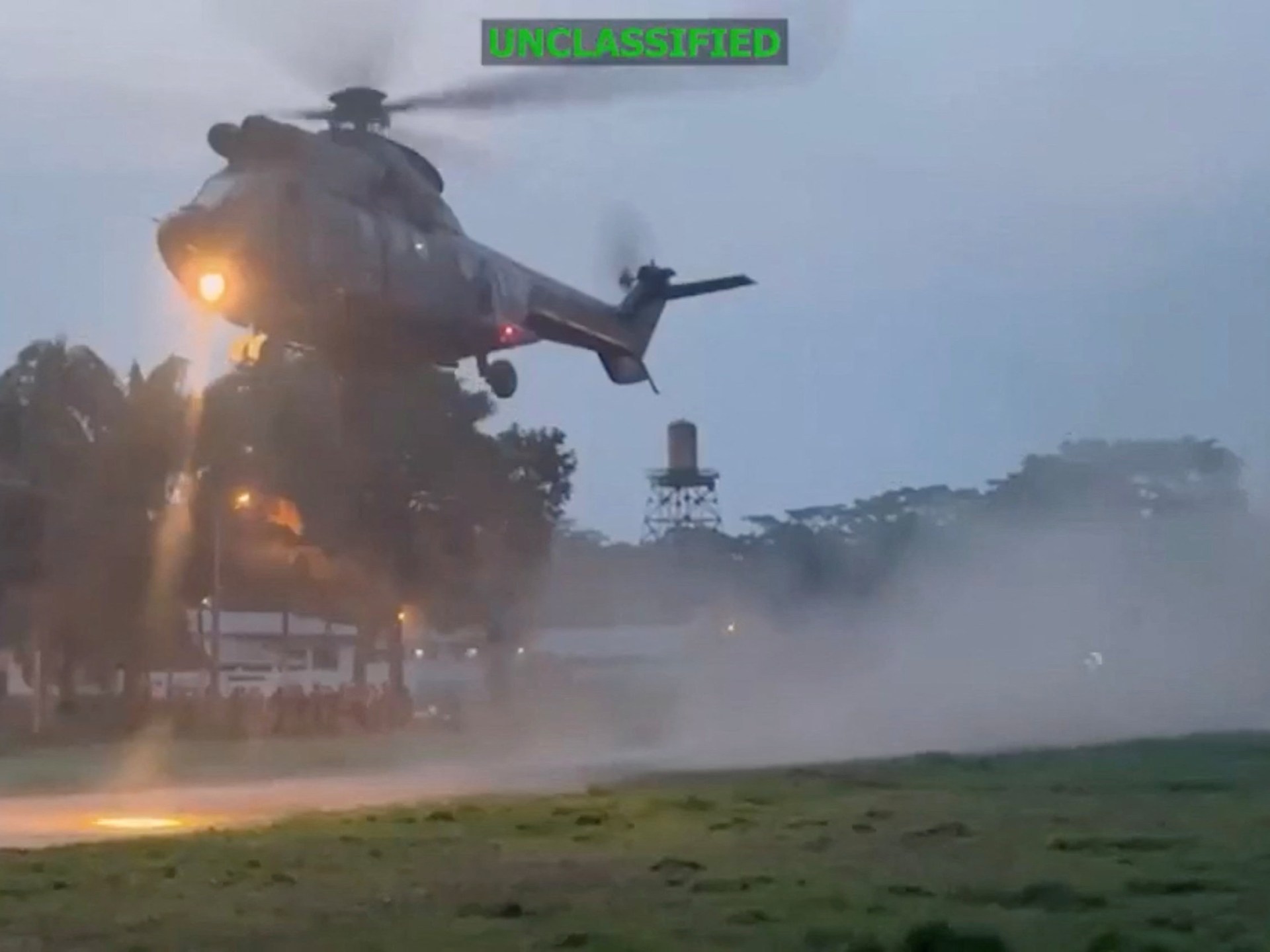
On Wednesday, US Southern Command, the military unit overseeing operations in Central and South America, posted that joint efforts had already begun in Ecuador.

Recommended Stories

list of 3 itemsend of list

“On March 3, Ecuadorian and US military forces launched operations against Designated Terrorist Organizations in Ecuador,” General Francis Donovan said.

“The operations are a powerful example of the commitment of partners in Latin America and the Caribbean to combat the scourge of narco-terrorism.”

The statement was accompanied by video footage of military helicopters taking off, as well as black-and-white aerial surveillance imagery of figures boarding helicopters on the ground.

The announcement appears to be part of US President Donald Trump’s broader push against criminal networks and drug cartels in Latin America.

The scope of the Ecuadorian operation is not yet known, but several US news outlets have reported that it is so far limited to supporting Ecuadorian troops through logistics and intelligence, citing government sources.

At a Wednesday news briefing, White House Press Secretary Karoline Leavitt praised the joint operation.

“Together, we are taking decisive action to confront narco-terrorists who have long inflicted terror, violence and corruption on citizens throughout the hemisphere,” she told reporters.

A military campaign against cartels

Since taking office for a second term last year, Trump has moved to label multiple prominent cartels as “foreign terrorist organisations”, a term typically reserved for armed groups with political aims.

His administration has paired those labels with an increasingly militaristic approach to combatting drug trafficking, including through the bombing of suspected smuggling vessels.

Critics have pointed out, however, that drug trafficking is considered a crime under international law, not an act of war, and that such lethal actions can be considered extrajudicial killings.

At least 44 aerial strikes have been carried out against alleged drug-smuggling boats and other maritime vessels in the Caribbean Sea and eastern Pacific Ocean.

The result has been 150 known deaths. The identities of the victims have yet to be confirmed by US officials, and no charges against them have been made public.

Two survivors who were recovered from an October attack on a submarine were quickly repatriated to their home countries, Ecuador and Colombia, where they were subsequently released.

Some families from Colombia and Trinidad and Tobago, meanwhile, have claimed that the deceased were fishermen or informal workers transiting between Venezuela and nearby islands, not drug traffickers.

The Trump administration has also launched military actions on Venezuelan soil, one in late December and a second on January 3. In both cases, it justified the strikes as law enforcement actions against drug traffickers.

The first targeted a dock allegedly used by the transnational gang Tren de Aragua. The second culminated in the abduction of Venezuelan President Nicolas Maduro, who was subsequently imprisoned and charged with drug trafficking and weapons charges in a US federal court.

That operation was likewise condemned as a violation of international law, with experts at the United Nations warning that it was “part of a broader and deeply troubling pattern” of unprovoked military aggression.

A new front for Trump’s anti-drug campaign

The Trump administration, however, has suggested it plans to expand its military operations against suspected drug traffickers to other land-based targets. The announcement from Ecuador suggests a new front for its military offensive.

Wednesday’s announcement comes two days after General Donovan, the head of the US Southern Command, visited Ecuadorian President Daniel Noboa and his defence ministers on March 2 in the capital of Quito.

Since the outbreak of the COVID-19 pandemic in 2020, Ecuador has seen a spike in homicides and other violent crimes, as criminal networks make inroads in the country.

Previously, Ecuador had some of the lowest rates of violent crime in the region, earning the country a reputation as an “island of peace” in Latin America.

But experts say the leap can be attributed to a number of factors, including high youth unemployment during the pandemic, economic instability, and a desire to exploit Ecuador’s strategic location on the Pacific coast, between major cocaine producers like Colombia and Peru.

Noboa, a right-wing leader who has been in office since 2023, campaigned for re-election last year on the pledge that he would tamp down on the uptick in crime. He has become closely associated with the “mano dura” or “iron fist” approach to law enforcement.

Trump too has encouraged Latin American leaders to be more aggressive in their handling of criminal networks, and both Noboa and Trump have threatened Colombia, led by left-wing leader Gustavo Petro, for allegedly failing to comply.

On March 1, for instance, Noboa plans to raise tariffs on Colombian imports to 50 percent as punishment for failing to crack down on cocaine trafficking.

Noboa announces ‘new phase’

On Wednesday, General Donovan praised the Ecuadorian military for their “unwavering commitment” to the fight “against narco-terrorists in their country”.

“Together, we are taking decisive action to confront narco-terrorists who have long inflicted terror, violence, and corruption on citizens throughout the hemisphere,” he said in a statement.

President Noboa, who has hosted Trump administration officials like Homeland Security Secretary Kristi Noem multiple times over the past year, also welcomed the increased collaboration.

“We are beginning a new phase in the fight against drug trafficking and illegal mining,” Noboa wrote on social media on March 2.

“The security of Ecuadorians is our priority, and we will fight for peace in every corner of the country. To achieve this peace, we must act decisively against criminals, wherever they may be.”

Still, critics responded to Wednesday’s announcement with scepticism and alarm about the increasing US military operations overseas.

Brian Finucane, a senior adviser at the International Crisis Group think tank, wrote on social media that the US has yet to clarify what its role in the joint operations was and what its targets were.

“My sense is that some in the administration have been itching to put US military boots on the ground somewhere for an operation against ‘narco-terrorists’ and then publicly brag about it,” Finucane said.
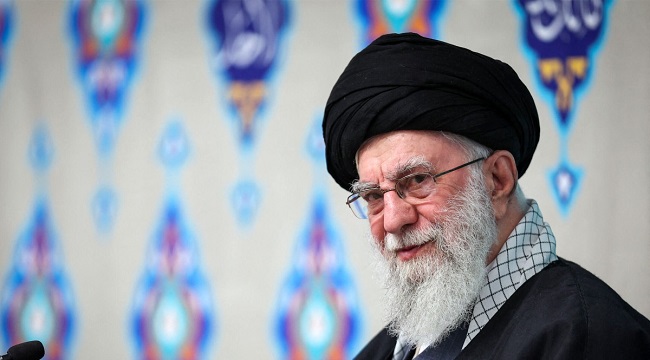
Iran’s Supreme Leader’s Son Mojtaba Khamenei Tipped As Successor

Mojtaba Khamenei, the son of late Iranian supreme leader Ali Khamenei, is among the leading contenders to succeed his father as the new head of the country.

Khamenei’s successor is set to be named by the top clerical body, the Assembly of Experts, with one of its members, Ahmad Khatami, telling Iranian state media on Wednesday that they hoped to vote “at the earliest opportunity”.

READ ALSO: ‘No Trust In The Americans,’ Iran Rules Out Negotiation With US

Contenders for the top position include Alireza Arafi, one of the three members of the interim council running the country, hardliner Mohsen Araki, and even Hassan Khomeini, the grandson of the founder of the country in 1979.

Mojtaba Khamenei, 56, would represent a hereditary transition that his father rejected as an idea in 2024.

Iran put an end to a multi-century royal dynasty headed by the shah.

Born on September 8, 1969, in the holy city of Mashhad in eastern Iran, Mojtaba Khamenei is one of the late supreme leader’s six children.

Ayatollah Ali Khamenei died aged 86 on Saturday in Tehran, in one of the opening US-Israeli missile strikes of the war.

Because of his discretion at official ceremonies and in the media, Mojtaba’s true influence has been the subject of intense speculation for years among the Iranian population as well as in diplomatic circles.

He is the only child of the former supreme leader to hold a public position despite having no official post.

The cleric, who has a salt-and-pepper beard and the black turban of the “seyyed”, descendants of the Prophet Mohammed, has been presented by some as the real boss, acting behind the scenes at the heart of power in Iran.

He is regarded as close to conservatives, notably because of his ties with the Revolutionary Guards, the ideological army of the country.

This relationship dates back to his service in a combat unit at the end of the war between Iraq and Iran from 1980-1988.

Security Force Links

The US Treasury Department imposed sanctions on Mojtaba Khamenei in 2019 during President Donald Trump’s first term, stating that the Iranian represented the supreme leader “despite never being elected or appointed to a government position aside from work in the office of his father”.

Ali Khamenei had “delegated a part of his leadership responsibilities” to his son “who worked closely” with Iranian security forces “to advance his father’s destabilising regional ambitions and oppressive domestic objectives,” it said.

Opponents have notably accused him of playing a role in the violent crackdown that followed the re-election of ultra-conservative president Mahmoud Ahmadinejad in 2009, which triggered a vast protest movement.

According to an investigation by the Bloomberg news organisation, which cited anonymous sources and Western intelligence agency reports, Mojtaba Khamenei has amassed wealth estimated at more than $100 million.

Money from oil sales had been channelled into investments in luxury British real estate, hotels in Europe, and property in Dubai through shell companies in tax havens, according to the article.

On the religious front, he studied theology in the holy city of Qom, south of Tehran, where he also taught.

He attained the rank of Hujjat al-Islam, a title given to mid-ranking clerics, below that of Ayatollah, held by his father and revolutionary founder Ruhollah Khomeini.

His wife, Zahra Haddad-Adel, daughter of a former speaker of parliament, also died in the US-Israeli strikes that killed the supreme leader, according to Iranian authorities.

Israeli Defence Minister Israel Katz warned on Wednesday that any successor to Ali Khamenei would become “a target”.

The Assembly of Experts has 88 members who are elected every eight years.

It has only overseen one leadership transition process to date, when Khamenei was selected in 1989 following the death of Khomeini.

Arsenal Extend Lead In Title Race After Saka Sinks Brighton

Arsenal showed they don’t always have to rely on set-pieces as Bukayo Saka sealed a 1-0 win against Brighton that moved the Premier League leaders a step closer to the title on Wednesday.

Saka, 24, celebrated becoming the fourth youngest player to reach 300 games for Arsenal with the deflected first-half strike that sealed a priceless result at the Amex Stadium.

Mikel Arteta’s side were underwhelming for long periods, but their work ethic and defensive efficiency allowed them to open up a seven-point lead over second-placed Manchester City.

City’s surprise 2-2 draw against lowly Nottingham Forest at the Etihad Stadium on Wednesday left the destiny of the title in Arsenal’s hands.

Although City have a game in hand on Arsenal and host the leaders in April, the Gunners have reeled off three successive league wins to quell suggestions that they lack the mentality required to cope with the pressure of the title race.

Having blown substantial leads to hand City the title in 2023 and 2024, Arsenal have survived the twists and turns more maturely this time and a first English crown since 2004 is now within touching distance.

READ ALSO: Slot Frustrated After Liverpool’s Heartbreak Against Wolves

Not for the first time this season, Arsenal earned few style points from their performance on the south coast.

But the quadruple chasers have won five and drawn two of their last seven league games, while advancing to the Champions League last 16, the League Cup final and the FA Cup fifth round.

Arsenal keeper David Raya nearly gifted Brighton a goal inside the first three minutes with a wayward pass to Carlos Baleba, whose lob from the edge of the area was cleared by Gabriel Magalhaes before it could cross the line.

That narrow escape served as a wake-up call for Arsenal and they took the lead in fortuitous fashion in the ninth minute.

Arsenal’s Italian defender #33 Riccardo Calafiori controls the ball during the English Premier League football match between Brighton and Hove Albion and Arsenal at the American Express Community Stadium in Brighton, southern England on March 4, 2026. (Photo by Glyn KIRK / AFP) 

Saka took possession on the right flank and advanced to the edge of the area for a fierce shot that deflected off Baleba and somehow squirmed through keeper Bart Verbruggen’s legs.

It was only Saka’s second goal in his last 19 games in all competitions.

 Arsenal dig deep

Brighton boss Fabian Hurzeler this week criticised Arsenal for taking too long with their set-pieces and he quickly complained to the fourth official when they prevaricated over a throw-in.

Arteta showed his displeasure with Hurzeler’s protest in a finger-jabbing exchange between the managers on the touchline.

Arsenal’s reliance on set-pieces for their attacking output sparked debate about their tactics following Sunday’s win against Chelsea when both their goals came from corners.

The Gunners have already scored 16 times from corners in 2025-26, equalling the Premier League record for a single season, and have 19 goals in total from dead balls.

Brighton’s English midfielder #13 Jack Hinshelwood (L) vies with Arsenal’s Spanish defender #03 Christhian Mosquera (R) during the English Premier League football match between Brighton and Hove Albion and Arsenal at the American Express Community Stadium in Brighton, southern England on March 4, 2026. (Photo by Glyn KIRK / AFP) 

Arteta defended Arsenal’s use of set plays, ignoring claims that they will be the “ugliest” champions ever if they win the title as he said their result against Chelsea was “beautiful”.

Critics of Arsenal’s style would hardly have been won over by a scrappy first half featuring just two shots from the prosaic leaders.

With Arsenal well below their best, Brighton pressed hard for an equaliser after the interval.

Georginio Rutter almost hauled Brighton level with an instinctive half-volley that forced a good save from Raya.

Yankuba Minteh drove into the Arsenal area for a shot that deflected just wide before Jack Hinshelwood headed wastefully over from six yards.

Arsenal were without France defender William Saliba due to an ankle injury, but they dug deep to keep Brighton at bay on a potentially decisive evening.

[VIDEO] Nigeria Much Better Than It Was 10 Years Ago — Reno Omokri

Ambassador-designate Reno Omokri, on Wednesday, said that Nigeria is much better under the leadership of President Bola Tinubu than it was a decade ago.

READ ALSO: Reno Omokri Defends Ambassador Role Despite Past Comments Against Tinubu

He said things were improving in different sectors of the country under Tinubu’s government.

Watch the interview below.

[embedded content]

Omokri noted that the President had taken steps to address security challenges in the nation.

According to him, security does not improve overnight, but over time.

Tinubu Renews Appointment Of Prof. Ayo Omotayo As NIPSS DG

President Bola Tinubu has approved the renewal of the appointment of Professor Ayo Omotayo as the Director-General of the National Institute for Policy and Strategic Studies (NIPSS), Kuru.

The Special Adviser to the President on Information and Strategy, Bayo Onanuga, disclosed this in a statement on Wednesday.

The appointment is for a final term of four years.

President Muhammadu Buhari initially appointed Omotayo in November 2021, with the Senate confirming the appointment in February 2022.

READ ALSO: Tinubu Sends Delegation To Jesse Jackson’s Funeral

Omotayo is a Professor of Environmental Sustainability. He attended the University of Ibadan from 1980 to 1990, where he obtained a PhD in Geography.

He began his teaching career at the Lagos State University in 1985 and rose through the ranks
to become a Senior Lecturer in 1992 at the age of 30.