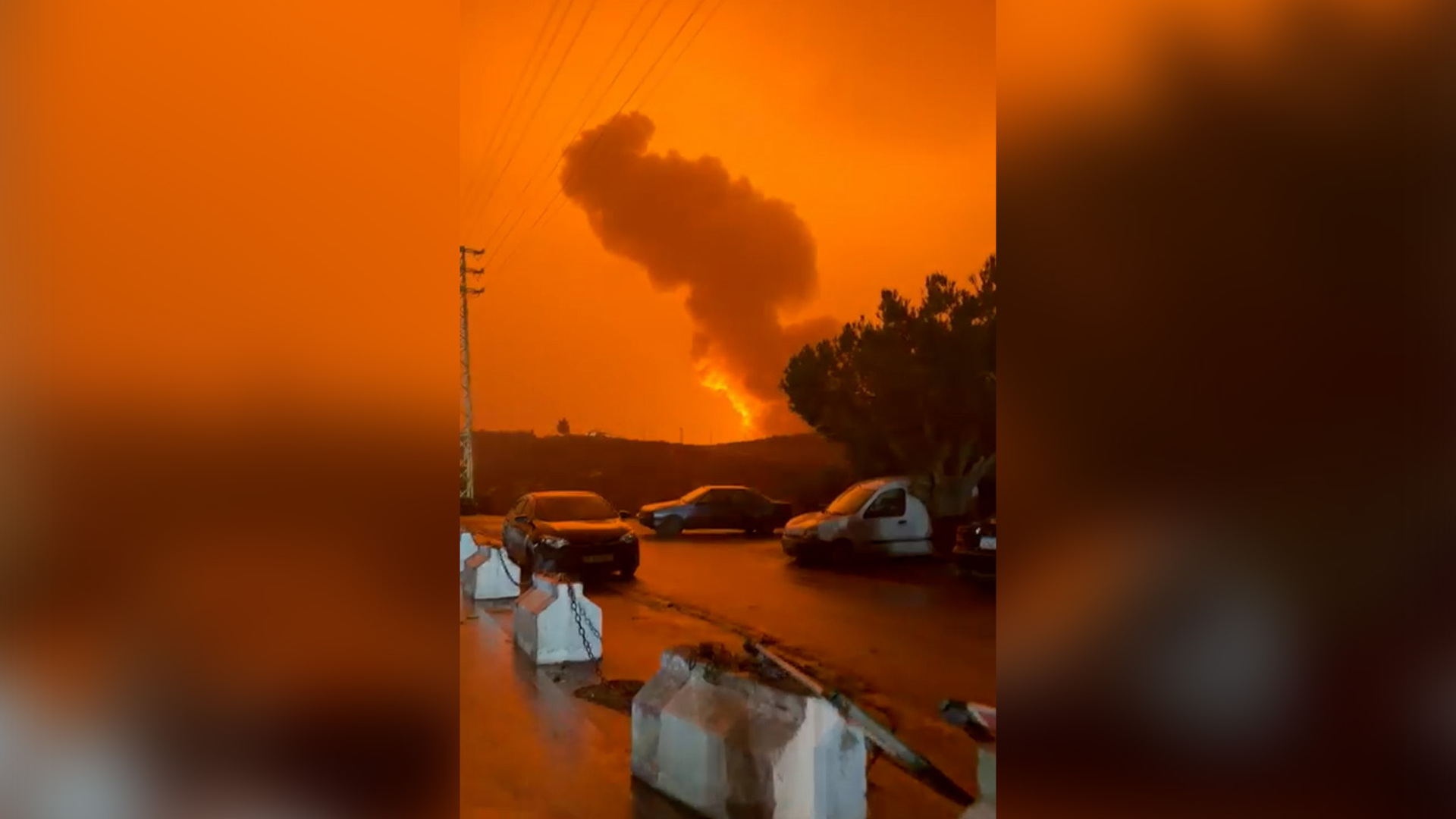
Video shows Israeli air strikes pounding areas in southern Lebanon in violation of the November 2024 ceasefire with Hezbollah. Israel says its near-daily attacks are targeting the group’s members or infrastructure. Lebanese officials say more than 10,000 violations have killed at least 330 people.
The Football Interview is a new series in which the biggest names in sport and entertainment join host Kelly Somers for bold and in-depth conversations about the nation’s favourite sport.
We’ll explore mindset and motivation, and talk about defining moments, career highs and personal reflections. The Football Interview brings you the person behind the player.
It may have taken longer than he hoped, but Florian Wirtz is up and running at Liverpool.
After joining the Reds from Bayer Leverkusen for £116m in the summer, the 22-year-old Germany international had to wait 190 days for his first goal.
A month on, his tally stands at five goals and five assists.
Before moving to Anfield, Wirtz was part of the Leverkusen side Xabi Alonso led to a first Bundesliga title in their 120-year history.
The attacking midfielder had already made a record of his own when, in May 2020, he made his top-flight debut aged 17, and just 19 days later became the youngest goalscorer in the competition’s history.
To play this video you need to enable JavaScript in your browser.
Kelly Somers: Florian, thank you for your time. Let’s try to get to know you a little better. Let’s start with your first memory of playing football…
Florian Wirtz: It has to be in my hometown, maybe with my sister on the football pitch.
Kelly: What was your first club called?
Florian: I will say it in German – SV Grün-Weiß Brauweiler.
Kelly: And your dad is the chairman there…
Florian: He is the guy for everything. Without him, the club would not work. He has to do everything. Sometimes on a Sunday, he does the lines on the pitch. He really does everything. I had no other choice [but to play for them]. He was also my first coach. He was more hard on me, but I think that helped me a little bit.
Kelly: You started playing for your dad with your local team… at what point did you think you could make it into a career?
Florian: I probably felt it very early because when we played at school or on the street, I was always in the team with less players because they said the other team needs more players to play against me. I think it was a bit obvious that I was good at playing football.
Kelly: Can you remember first signing for one of the bigger clubs and what it was like?
Florian: This was at the age of six or seven. Even then I was choosing between Bayer Leverkusen and Cologne. I was practising at both clubs because my parents told me to do that, just to try it because I was a very shy little boy. I didn’t want to go there and meet the new guys or new teams, I just wanted to stay at my old team with my friends. I went to Cologne and they did everything to convince me to join them. It is better than in just a small club – they have better coaches, better teams, so it was important. I think I made this choice to do it, although I didn’t want to do it really. Then, after nine and a half years, my step to Leverkusen. I think it was the most important thing I did.
Kelly: What a time you had at Leverkusen. From such a young age, becoming the Bundesliga’s youngest ever scorer… you couldn’t really have done much more there could you?
Kelly: And then Liverpool… the move here in the summer. There was lots of talk about where you were going to end up, but why was this the right place for you in the end?
Florian: I thought, ‘this is the right place to get better and a bigger player’. The club is so big and the team won the Premier League last year. I had very good meetings with the manager before I joined and a few players contacted me. Virgil [van Dijk], Mo [Salah] as well, sent me a message. They were not begging me to come but just tried to give me a feeling about Liverpool.
Virgil said he would be happy if I come, and maybe I can help the team to get even better than they were last year. These are things you like to hear and helps you to decide in the end. I am still happy that I made this decision, even when the start wasn’t that easy.
Kelly: How did you deal with that? When you came here, everyone was so excited to see you in the Premier League and everyone was talking about you. What was that period like while you did adjust?
Florian: I was very excited when I came and wanted to be an instant success. It didn’t come like this. I just had to stay strong in my mind and keep believing in myself that at one point it has to click. I was telling myself: ‘You did so good in Germany, you can’t just forget how to play football here.’ It was not completely different football. It was not easy always to have the confidence on the pitch, but I think I dealt really well with it and my people around me helped.
Kelly: Did anyone in particular help you through it?
Florian: I am not a person who likes to talk a lot about these things. But with my family and my friends, all of them kept believing in me.
Kelly: The start wasn’t easy but it looks like you have found your rhythm now. How are you feeling in yourself in terms of getting to your maximum?
Florian: Now I am feeling much better than at the start of the season. It’s nice to play with players like Hugo [Ekitike].
Kelly: What is he like? We sat down with him before and he seems like a character.
Getty Images
Kelly: What does an ideal day off look like? How do you like to escape football?
Florian: Since the summer, I like to play padel. I went a few times with some players here.
Kelly: Who plays from Liverpool?
Florian: Dominik [Szoboszlai], Milos [Kerkez]… Jeremie [Frimpong] says he’s good but I’ve not seen him.
Kelly: Are you any good?
Florian: I’m not that good. If you ask the others, I am better than Jeremie. He knows for sure I am better than him!
Kelly: What else do you like to do?
Florian: I like to have a nice breakfast. I love breakfast – scrambled eggs, pancakes… I can eat a lot. The nutritionist is very happy with me because I eat a lot of fuel for the games.
Kelly: So you have breakfast and play padel… anything else?
Florian: Maybe just chill… play PlayStation. I have a dog as well – Zoomer… but it’s not after Paw Patrol. Everyone asks me about that.
Kelly: What’s it named after then?
Florian: Just random.
Kelly: What were you like as a youngster? What kind of child was Florian Wirtz?
Florian: My parents always say I was very shy and always hiding behind my sisters. I was one of 10. I am the youngest.
Kelly: What was that like growing up?
Florian: To be honest, it’s not that bad because everyone cares about you… you are the youngest. When my parents wanted to go out, they could come and look after me. It’s nice to have so many loved ones on birthdays and Christmas.
Kelly: I’m told you are not the only footballer of your siblings…
Florian: My sister [Juliane] plays for Werder Bremen. She also played for Brauweiler, Cologne and Leverkusen. We played at the same time for three clubs.
Kelly: What was that like for you?
Florian: It was nice because sometimes we could drive together to training. I am very proud of her – she is doing good. I’m happy for her because she is having a very good season with her team.
Kelly: You are not at the same club now or even in the same country… are you still speaking about football and watching each other’s games?
Florian: My sister always wishes me good luck for the games and calls or texts me. I always try to watch her games if I can. It’s nice we have the same ambitions and the same way to think about football. I’m happy she is a footballer so we have something in common and it’s nice.
Kelly: If you could only achieve one more thing in your career, what would it be?
Myanmar’s military-backed party secured a sweeping victory in the country’s three-phase general election, according to state media, following the tightly controlled voting held amid civil war and widespread repression.
The final of three rounds of voting last weekend wrapped up an election that began on December 28, more than four years after the military seized power in a coup that overturned the elected government of Aung San Suu Kyi.
Recommended Stories
list of 4 itemsend of list
Dominating all phases of the vote, the Union Solidarity and Development Party (USDP) won an overwhelming majority in Myanmar’s two legislative chambers, state media reports.
The USDP secured 232 of the 263 seats up for grabs in the lower house and 109 of the 157 seats announced so far in the upper chamber, according to results released on Thursday and Friday.
A spokesman for the country’s military rulers, Zaw Min Tun, said Myanmar’s parliament is now expected to convene to elect a president in March, with a new government set to take over in April, according to a report in the pro-military Eleven Media Group.
Myanmar, formerly known as Burma, has been in political turmoil since the 2021 coup, with the crushing of pro-democracy protests prompting a nationwide rebellion. Thousands have been killed, and about 3.6 million people have been displaced, according to the United Nations.
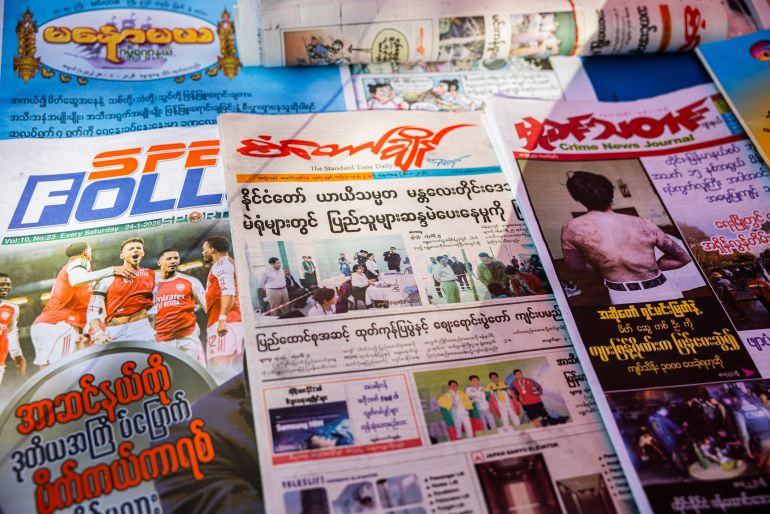
Local newspapers feature headlines covering the conclusion of Myanmar’s general election on January 26, 2026, in Yangon, Myanmar [Lauren DeCicca/Getty Images]
‘Vote purely out of fear’
The 11-member Association of Southeast Asian Nations (ASEAN) has said it will not endorse Myanmar’s electoral process, and human rights groups and some Western countries have also expressed concerns about the credibility of the election.
The UN human rights office said that large segments of the population, including minorities such as ethnic Muslim-majority Rohingya, were excluded from voting since they have been denied citizenship, and many have also been displaced outside the country.
At least 170 civilians were killed in air strikes during the election period, and about 400 people were arrested, according to the UN.
“Many people chose either to vote or not to vote purely out of fear,” UN human rights chief Volker Turk said.
Myanmar’s military rulers insist the polls were free and fair, and supported by the public.
A spokesperson for the United States Department of State, which has muted its critiques of foreign elections in the second Trump administration, said it was monitoring the situation and “will assess the military regime’s next steps”.
Aung San Suu Kyi’s National League for Democracy was dissolved along with dozens of other parties, and some others declined to take part, drawing condemnation from critics who say the process was designed to legitimise military rule.
The United States government has entered what is expected to be a brief shutdown after Congress failed to approve a deal to keep a wide swath of operations funded ahead of a midnight deadline.
After hours of delay, the US Senate passed the spending package by a bipartisan vote of 71 to 29 late on Friday, but the House of Representatives is not expected to vote on the new budget bills until Monday at the earliest.
Recommended Stories
list of 4 itemsend of list
US President Donald Trump must then sign the bills into law.
As a result, the partial shutdown of the US government took effect at 12:01 am Eastern time (0501 GMT). The shutdown is likely to be brief.
Lawmakers from both parties have been working to ensure a debate over immigration enforcement does not disrupt other government operations, despite mounting Democratic anger over the killing of two people by immigration agents in Minnesota.
This is a marked contrast from last fall, when Republicans and Democrats dug into their positions in a dispute over healthcare, prompting a shutdown that lasted a record 43 days and cost the US economy an estimated $11bn.
“Technically, there will be a partial government shutdown come midnight on Saturday,” Al Jazeera’s Rosiland Jordan said earlier on Friday, reporting from Washington, DC.
“The earliest that the House of Representatives can take a look at the changes, which the US Senate approved late on Friday, is not before Monday. That’s because they’ve been in recess all this week. They should be coming back to Washington this weekend,” Jordan said.
But there is also a concern the shutdown could drag out longer, given political polarisation around Trump’s administration’s harsh immigration raids and the killing of US citizens at those operations.
“So there is the expectation that this could be resolved early next week. But there is the possibility that it may not be,” Jordan added.
The funding impasse has been driven by Democratic anger over aggressive immigration enforcement following the fatal shootings of two US citizens – Alex Pretti and Renee Good – by federal agents in separate incidents this month in the northern city of Minneapolis amid a violent operation against undocumented migrants.
The killings in Minneapolis have become a flashpoint that has hardened opposition to approving new money for the Department of Homeland Security (DHS) without changes to how immigration agencies operate.
“The nation is reaching a breaking point,” Senate Democratic leader Chuck Schumer said after the vote. “The American people are demanding that Congress step up and force change.”
“Instead of going after drug smugglers, child predators, and human traffickers, the Trump Administration is wasting valuable resources targeting peaceful protestors in Chicago and Minneapolis,” Senate Democratic Minority Whip Dick Durbin posted on social media.
“This Administration continues to make Americans less safe.”
As lawmakers in both parties called for investigations into the fatal shootings, Trump said he didn’t want a shutdown and negotiated the rare deal with Schumer, his frequent adversary. Trump then encouraged members of both parties to cast a “much needed Bipartisan ‘YES’ vote.”
Under the deal negotiated between the White House and Senate Democratic leaders, lawmakers approved five outstanding funding bills to finance most of the federal government through the end of the fiscal year in September.
The deal approved by the Senate separates funding for the DHS – which oversees immigration agencies – from the broader government funding package, allowing lawmakers to approve spending for agencies such as the Pentagon and the Department of Labor while they consider new restrictions on how federal immigration agents operate.
Cricket’s shortest international format will take centre stage over the next month as the ICC T20 World Cup 2026 gets under way on February 7.
Five stadiums across India and three in Sri Lanka will host matches, as 20 teams fight for the world title.
Recommended Stories
list of 4 itemsend of list
Here’s everything you need to know about the venues:
Narendra Modi Stadium
Location: Ahmedabad, India Capacity: 132,000 Inauguration: 1983 Fixtures: South Africa vs Canada (February 9), South Africa vs Afghanistan (February 11), New Zealand vs South Africa (February 14), India vs Netherlands (February 18), Super 8s Match 3 (February 22), Super 8s Match 7 (February 26), Final (March 8)
The world’s largest cricket stadium is designated to host seven matches, including the final and two Super 8s fixtures.
Before it was renamed after Indian Prime Minister Narendra Modi, the venue was known as the Motera Stadium or the Sardar Vallabhbhai Patel Stadium, after one of India’s best-known independence leaders.
The 2023 ODI World Cup final, in which India lost to Australia, was the biggest international match held at this venue.
The stadium has hosted several political events and rallies, too, including the “Namaste Trump” event in honour of United States President Donald Trump, back in 2020.
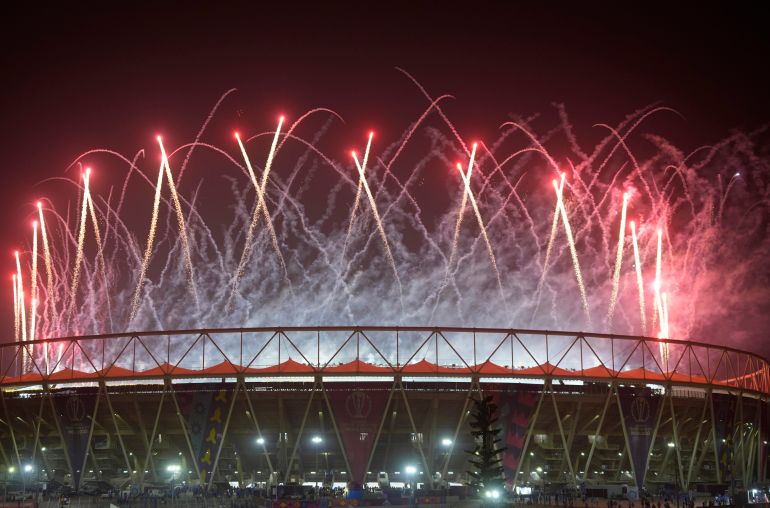
Fireworks light up the sky over the Narendra Modi Stadium after the 2023 ICC ODI World Cup final [File: Ajit Solanki/AP Photo]
Wankhede Stadium
Location: Mumbai, India Capacity: 33,100 Inauguration: 1974 Fixtures: India vs USA (February 7), England vs Nepal (February 8), England vs West Indies (February 11), Nepal vs Italy (February 12), West Indies vs Nepal (February 15), Scotland vs Nepal (February 17), Super 8s Match 4 (February 23), Semifinal 2 (March 5)
Located in the coastal city of Mumbai, the Wankhede Stadium is no stranger to high-stakes matches. It hosted the 2011 ODI World Cup final, in which India beat Sri Lanka to lift its second world title.
The venue, also the home ground of IPL franchise Mumbai Indians, will host the most games (eight) in India during the tournament, including a semifinal.
Though smaller in size than most of India’s popular stadiums, the Wankhede’s passionate crowd consistently creates one of the best atmospheres.
The Wankhede Stadium in Mumbai is known for delivering one of the best fan experiences across the country [File: Francis Mascarenhas/Reuters]
Eden Gardens
Location: Kolkata, India Capacity: 68,000 Inauguration: 1864 Fixtures: West Indies vs Scotland (February 7), Scotland vs Italy (February 9), England vs Scotland (February 14), England vs Italy (February 16), West Indies vs Italy (February 19), Super 8s Match 12 (March 1), Semifinal 1 (provisional, March 4)
Known as the “home of Indian cricket”, Eden Gardens is the oldest cricket stadium in the country. The venue will host seven matches at the tournament, including possibly the first semifinal.
The first purpose-built ground for the sport in India, Eden Gardens, has hosted matches during five ICC World Cups, including the finals of the 1987 ODI and 2016 T20 World Cups.
It is also the home ground of the IPL’s Kolkata Knight Riders since 2008.
The Eden Gardens also hosted a semifinal during the 2023 ODI World Cup in India [File: Andrew Boyers/Reuters]
Arun Jaitley Stadium
Location: New Delhi, India Capacity: 55,000 Inauguration: 1883 Fixtures: Netherlands vs Namibia (February 10), India vs Namibia (February 12), Canada vs UAE (February 13), Afghanistan vs UAE (February 16), South Africa vs UAE (February 18), Super 8s Match 11 (March 1)
Situated in India’s capital, New Delhi, the Arun Jaitley Stadium has hosted matches at five World Cups. At this tournament, the venue will host six games, including a Super 8s fixture.
Formerly known as the Feroz Shah Kotla Stadium, the venue was renamed after a former finance minister and parliamentarian from PM Modi’s Bharatiya Janata Party, following his death in 2019.
It is the home of the IPL team Delhi Capitals.
The Arun Jaitley Stadium was also one of the venues during the 2023 ODI World Cup – the last time India hosted a World Cup [File: Anushree Fadnavis/Reuters]
M A Chidambaram Stadium
Location: Chennai, India Capacity: 38,200 Inauguration: 1916 Fixtures: New Zealand vs Afghanistan (February 8), New Zealand vs UAE (February 10), USA vs Netherlands (February 13), USA vs Namibia (February 15), New Zealand vs Canada (February 17), Afghanistan vs Canada (February 19), Super 8s Match 8 (February 26)
Located close to one of the longest urban beaches in the world – Chennai’s Marina Beach along the Bay of Bengal – the M A Chidambaram Stadium is known for being home to a sporting and knowledgeable cricket crowd.
Named after former Board of Control for Cricket in India (BCCI) president, M A Chidambaram, the venue is commonly known as the Chepauk Stadium. Home of the Chennai Super Kings IPL franchise, the stadium has hosted matches across four ODI World Cups.
At this edition, it will host seven games, including a Super 8s tie.
The Chepauk Stadium rounds up the list of venues in India [File: Michael Steele/Getty Images]
R Premadasa Stadium
Location: Colombo, Sri Lanka Capacity: 35,000 Inauguration: 1986 Fixtures: Sri Lanka vs Ireland (February 8), Australia vs Ireland (February 11), Australia vs Zimbabwe (February 13), India vs Pakistan (February 15), Sri Lanka vs Zimbabwe (February 19), Super 8s Match 1 (February 21), Super 8s Match 6 (February 25), Super 8s Match 9 (February 27)
The largest stadium in Sri Lanka, the R Premadasa Stadium, will host a majority of the heavyweight fixtures at the tournament, including India vs Pakistan, the most anticipated clash at any ICC event.
The venue is scheduled to host eight games, including three Super 8s fixtures, but two more could be added to its list.
If Pakistan qualifies for the semifinals, the R Premadasa Stadium, considered a neutral venue, will replace Kolkata as the host of the first semifinal. If Pakistan reach the final, that venue will also shift from Ahmedabad to Colombo.
As per an ICC-brokered agreement between India and Pakistan, both countries have the option to play their games at a neutral venue for a tournament hosted by either South Asian nations.
Known as the home of Sri Lankan cricket, the R Premadasa Stadium played host to three World Cups [File: Hafsa Adil/Al Jazeera]
Sinhalese Sports Club
Location: Colombo, Sri Lanka Capacity: 10,000 Inauguration: 1952 Fixtures: Pakistan vs Netherlands (February 7), Zimbabwe vs Oman (February 9), Pakistan vs USA (February 10), Ireland vs Oman (February 14), Pakistan vs Namibia (February 18)
The smallest venue at the tournament, the Sinhalese Sports Club, will host the fewest matches (five), but features the all-important opening match between former champions Pakistan and the West Indies.
Situated only 5km (3.1 miles) away from the R Premadasa Stadium in Colombo, the venue will host a World Cup for only the second time, following its maiden attempt at the 1996 ODI World Cup.
Sinhalese Sports Club has hosted test matches along with its maiden World Cup game in 1996 [File: Stu Forster/Getty Images]
Pallekele International Cricket Stadium
Location: Kandy, Sri Lanka Capacity: 35,000 Inauguration: 2009 Fixtures: Sri Lanka vs Oman (February 12), Australia vs Sri Lanka (February 16), Ireland vs Zimbabwe (February 17), Australia vs Oman (February 20), Super 8s Match 2 (February 22), Super 8s Match 5 (February 24), Super 8s Match 10 (February 28)
The Pallekele International Cricket Stadium rounds out the full list of venues at the T20 World Cup 2026. It will host seven games, including three Super 8s matches.
Opened 17 years ago, it is the newest of all venues at this year’s tournament. Situated in central Sri Lanka, the stadium was built for the 2011 ODI World Cup and also used at the 2012 T20 World Cup.
Pallekele International Cricket Stadium played host to the Asia Cup, including the Group A match between India and Nepal in 2023 [File: Surjeet Yadav/Getty Images]
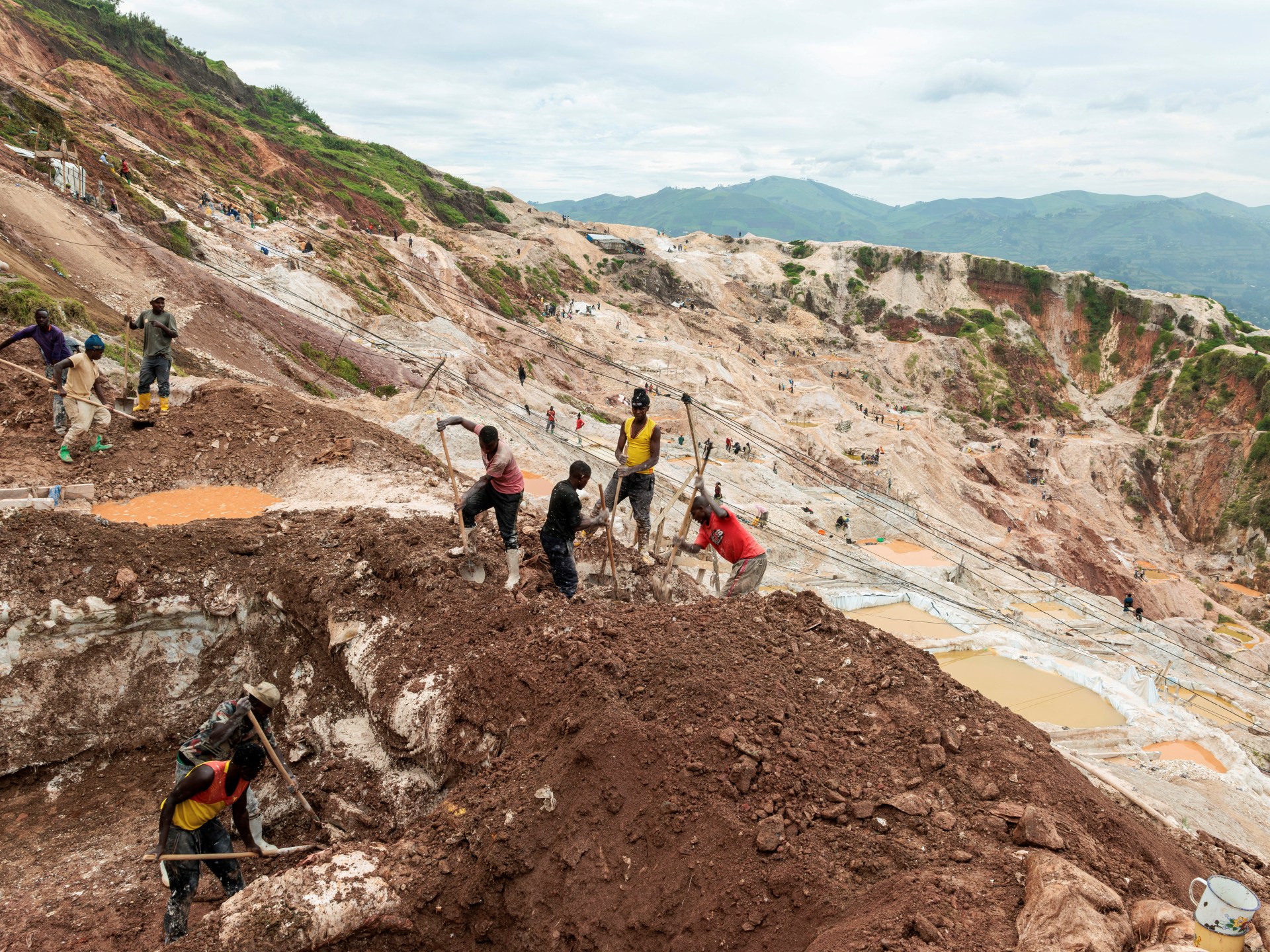
More than 200 people have been reported killed in a collapse at the Rubaya coltan mine in eastern Democratic Republic of the Congo (DRC), Lumumba Kambere Muyisa, spokesperson for the rebel-appointed governor of the province where the mine is located, told the Reuters news agency.
The mine, located some 60km (37 miles) northwest of Goma city, the provincial capital of North Kivu province, collapsed on Wednesday, and the precise number of casualties was still unclear as of Friday evening, Reuters reports.
Recommended Stories
list of 4 itemsend of list
“More than 200 people were victims of this landslide, including miners, children and market women. Some people were rescued just in time and have serious injuries,” Muyisa told Reuters, adding that about 20 injured people were being treated in health facilities.
“We are in the rainy season. The ground is fragile. It was the ground that gave way while the victims were in the hole,” he said.
Eraston Bahati Musanga, the governor of North Kivu province appointed by the M23 rebel group, told the AFP news agency on Friday that “some bodies have been recovered”, without giving a specific figure of the number of those killed and injured, but suggesting a potentially high death toll.
An adviser to the provincial governor put the death toll at more than 200, speaking on condition of anonymity to Reuters because he was not authorised to brief the media.
AFP said it was unable to confirm the death toll with independent sources as of Friday evening.
Franck Bolingo, an artisanal miner interviewed at Rubaya by AFP, said people are believed to still be trapped inside the mine.
“It rained, then the landslide happened and swept people away. Some were buried alive, and others are still trapped in the shafts,” Bolingo said.
Rubaya produces about 15 percent of the world’s coltan, which is processed into tantalum, a heat-resistant metal that is in high demand by makers of mobile phones, computers, aerospace components and gas turbines.
The mine, where locals dig manually for a few dollars per day, has been under the control of the Rwanda-backed M23 rebel group since 2024, after previously changing hands between the DRC government and rebel groups.
The heavily-armed M23 rebels, whose stated aim is to overthrow the DRC government in the capital Kinshasa, captured even more mineral-rich territory in the east of the country during a lightning advance last year.
The United Nations has accused M23 rebels of plundering Rubaya’s resources to help fund their rebellion, backed by Rwanda, an allegation that the government in Kigali denies.