Archive January 31, 2026

Officials defend conditions at pre-Olympic race after Vonn crash

Lindsey Vonn crashed out of a World Cup downhill on Friday that was hazardous to her Olympic medal hopes, though judged safe by race officials and team coaches.

Safe, it was agreed, at the place and exact time that Vonn lost control when landing a jump and spun into an awkward slide into the safety nets, injuring her left knee.

Recommended Stories

list of 4 itemsend of list

“It was probably good light in the spot where she completely missed the line and did the mistake,” World Cup race director Peter Gerdol said.

Gerdol spoke after the late-afternoon meeting of race and team leaders to debrief the day and detail the next morning’s schedule.

At the meeting in Crans-Montana – starting minutes after Vonn posted on social media her Olympic downhill dream next weekend was alive – a broad agreement was that the race had been safe. Some objected to it being cancelled at all.

About 25 minutes after Vonn crashed as the No 6 starter, with the race still paused, Gerdol and the race jury called it off for safety reasons.

“I feel for those guys, they have a tough job,” United States head coach Paul Kristofic said.

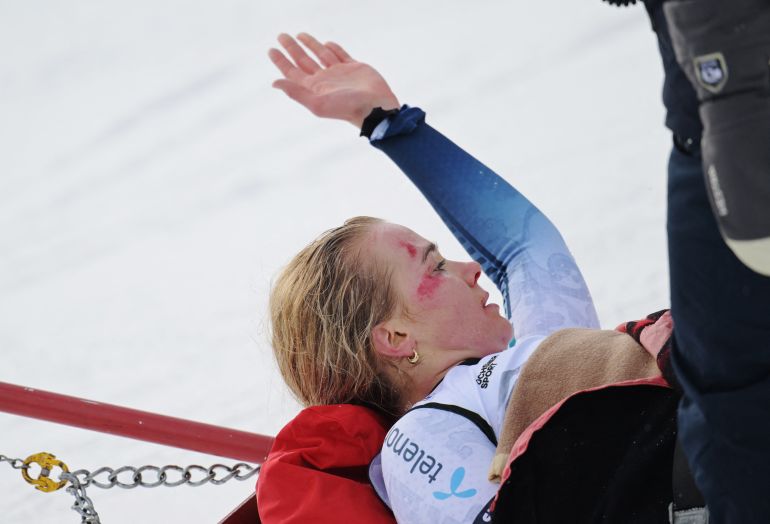
Norway's Marte Monsen waves to the crowd after being stretchered off following a crash
Norway’s Marte Monsen waves to the crowd after being stretchered off following a crash during her run [Romina Amato/Reuters]

By 10:50am local time on an overcast day in the Swiss Alps, the light had dimmed since the 10am start and was forecast to get worse. It did.

The race may have seemed unsafe because three of the six starters failed to finish, and even leader Jacqueline Wiles barely made a tight final turn that caused one crash.

Still, the Austria coach said his racer Nina Ortlieb’s exit as the first starter, at the same spot as Vonn, was caused by a poor racing line, not poor light.

Roland Assinger later said racing had been much safer than two weeks ago at Tarvisio, Italy, where the women went “110 kilometres an hour (70 miles per hour) through the fog where you can see nothing”.

Assinger’s view echoed the view of Vonn’s teammate, Breezy Johnson, who was caught swearing on a television hot mic while chatting with racers in the warmup area when the cancellation news came.

World champion Johnson recalled the “(expletive) rain in Tarvisio” and added: “Then they are like ‘This is too bad a visibility.’ Like, what the …” Johnson later apologised for her choice of words in a social media post.

Swiss TV commentator Patrice Morisod, who had chuckled on air hearing Johnson’s words live, later said: “If we cancel such a race then we don’t have ski sport.”

Lindsey Vonn of Team United States crashes out during the Audi FIS Alpine Ski World Cup Women's Downhill on January 30, 2026 in Crans Montana, Switzerland
Lindsey Vonn of Team United States is helped to her feet after she crashed out injurying her knee in Crans-Montana, Switzerland [Michel Cottin/Agence Zoom/Getty Images]

What Gerdol and Morisod agreed on was disliking the tight turns into the finish line that sent Norwegian racer Marte Monsen into the fences and almost tricked Wiles.

“It’s not downhill,” Morisod said. “For me, that’s a big mistake for the FIS.”

Gerdol told the coaches’ meeting that the course design will be reviewed before the two-week world championships Crans-Montana will stage in one year.

“In view of the championships next year, we will definitely work on this,” the race director acknowledged.

The 2027 world seems far away when the Milan Cortina Olympics open next Friday, and the marquee women’s downhill is scheduled two days later.

Vonn faces a race to be fully fit for the Olympics she targeted in her remarkable comeback as the fastest 40-something in women’s ski race history.
Why attacking UNRWA is attacking Gaza’s survival

The January 14 announcement of the new Palestinian technical committee to oversee Gaza’s reconstruction comes at a critical moment. While states are discussing the governance and reconstruction of Gaza, on the ground, the basic survival of 2.1 million people hangs by a thread. This moment demands immediate action to lift the ongoing and suffocating restrictions that are systematically dismantling the very means for Palestinians to survive.

Famine conditions in Gaza have moderately stabilised, but the humanitarian catastrophe continues to deepen. Families remain displaced without adequate shelter; children still go to bed hungry; and basic healthcare is out of reach for hundreds of thousands.

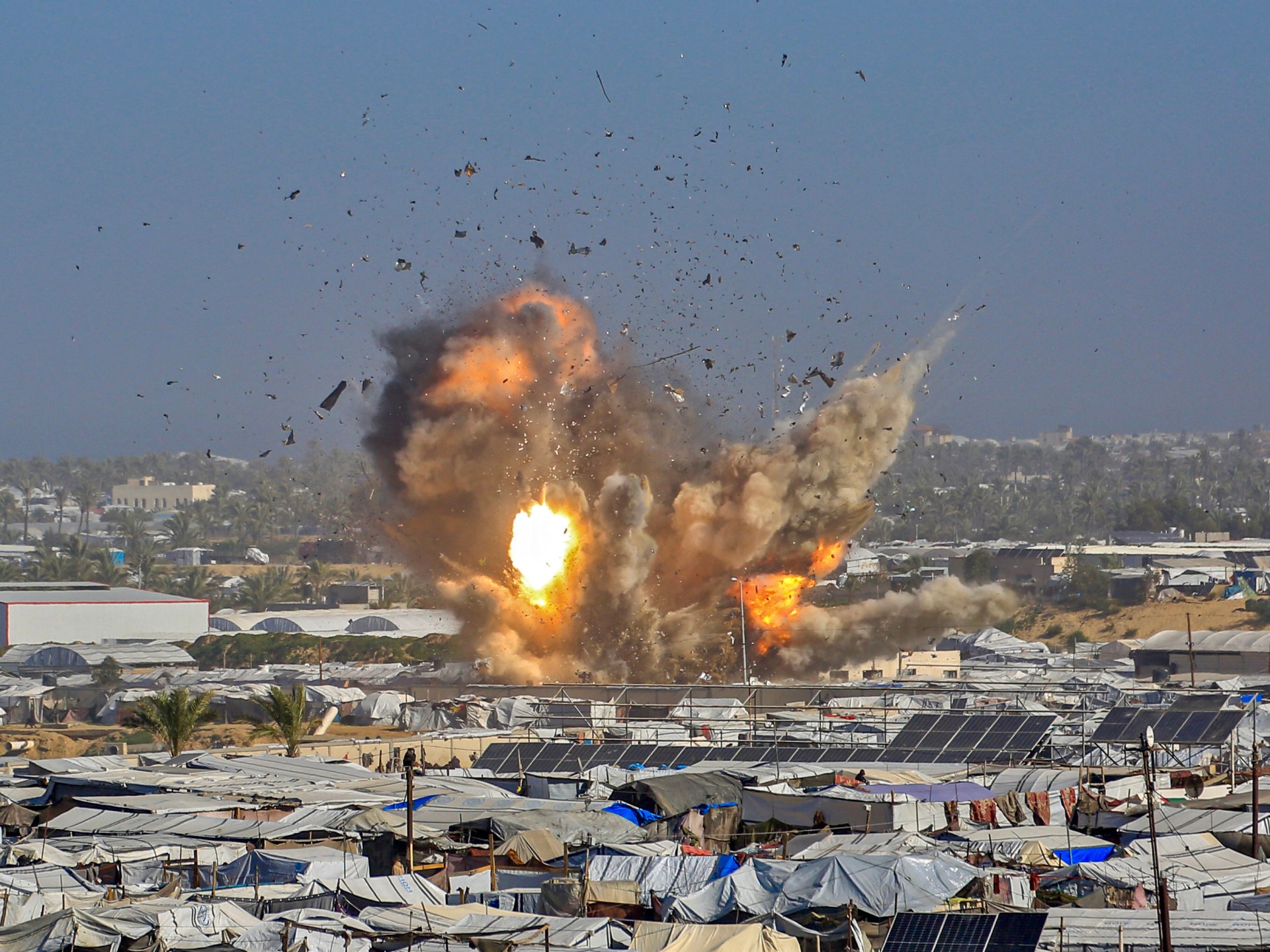
Winter rains have turned displacement camps into seas of mud, exacerbating suffering and significantly increasing the risk of disease outbreaks. Daily Israeli air attacks and bombardments continue, with more than 500 Palestinians killed since the ceasefire agreement was announced in October. This month alone, seven UNRWA school compounds in eastern Gaza have been demolished by Israeli forces.

UNRWA remains Gaza’s largest and most comprehensive service provider, effectively acting as the public sector for more than half the population. Our 11,000 staff continue to operate despite immense risks, as they have done each day since October 7, 2023.

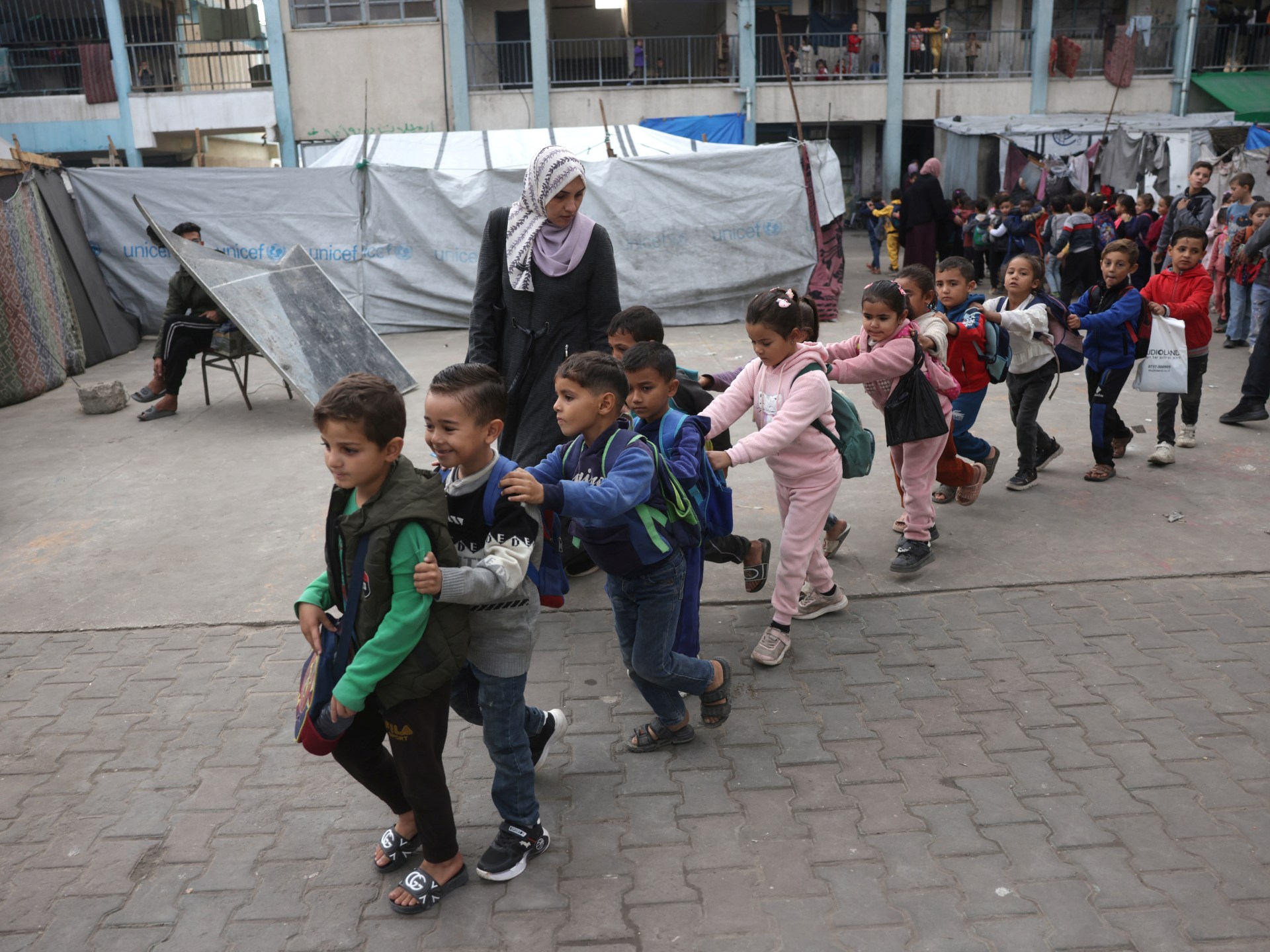
They are providing healthcare to almost 100,000 people each week and education to 70,000 children in damaged school premises across Gaza. Our schools also shelter tens of thousands of displaced families.

UNRWA teams essentially function like a local municipality; we distribute water and collect solid waste from entire communities, covering the needs of more than half the population. When we speak of “service delivery”, these are not abstract programmes. We are talking about the clinics where children are vaccinated, the classrooms where traumatised boys and girls find some collective care, and the distribution points where families are provided with basic sustenance.

Yet our ability to respond remains severely impeded by systematic barriers. What should we understand from the entire and complete assault on the most basic services needed for any community to survive?

Our goods are prevented from entering Gaza. We are unable to communicate with Israeli authorities – the occupying power that controls all of Gaza’s land, air and sea crossings – due to the “no contact” law passed by the Israeli parliament in October 2024.

Our international staff – myself included – are barred from entering Gaza to support the work of our teams on the ground.

Nowhere is the inhumanity of these restrictions more evident than in the denial of children’s basic rights. About 700,000 Palestinian children in Gaza are being systematically denied their right to education. Before the war, UNRWA was educating 300,000 of these children, accounting for two-thirds of all primary schooling.

UNRWA alone has the capacity, expertise and reach to resume this work at scale across Gaza, yet we are prevented from doing so by the same restrictions that target our broader operations.

We have launched a “Back to Learning” campaign to bring some hope and normality to children who have known only war, displacement and loss for more than two years. But instead of supporting this effort, the restrictions we face mean that most children remain in the rubble-strewn streets. This is a continuous and deliberate attack on their future.

We are not alone in facing unacceptable challenges that defy the most basic obligations of an occupying power under international law. The registration process for international NGOs has become a de facto blockade in itself, with the vast majority of the existing aid system now on the brink of shutdown.

Restrictions on so-called dual-use items have turned basic shelter and construction materials, among other essential supplies, into contraband, leaving families exposed to the elements and rendering reconstruction impossible as harsh winter weather persists.

This brings us to the uncomfortable truth: These restrictions are not merely bureaucratic impediments. They appear to be part of ongoing efforts to systematically dismantle the means for Palestinians to survive. Every restriction, every obstacle, every denial of basic materials adds another layer of evidence to South Africa’s case at the International Court of Justice (ICJ). So too do the attacks on the one United Nations agency – UNRWA – that is able to provide basic education and healthcare at scale, but is prevented from doing so.

UNRWA has a proven ability to provide continuous education, healthcare, social welfare, sanitation, humanitarian assistance and other support. It enjoys the trust and confidence of the Gaza population, whose world has been erased since October 2023.

Preserving UNRWA until there is a lasting peace is a pragmatic solution for anyone serious about Gaza’s future. It is essential for the wellbeing and recovery of more than two million people who have suffered beyond imagination.

Make no mistake – this is about far more than the future of a single UN agency. This is about defending the international rules-based order. When states pressure humanitarian responders, restrict humanitarian access and ignore ICJ rulings, they are targeting Palestinians while also attacking the very foundations of international law.

This has transcended the Palestine context and become a test case for the viability of humanitarian action and international law worldwide.

The time for half-measures and diplomatic ambiguity is over. The survival of Gaza is intrinsically linked to UNRWA’s continued operation. Defending this is about defending humanity, international law, and the possibility that even in the darkest circumstances, the world will continue to support compassion over cruelty.

The overwhelming majority of states voted in December 2025 to renew UNRWA’s mandate in the UN General Assembly. But that decision is impeded by the perpetrator of what the ICJ has found to be an illegal occupation and what the UN Commission of Inquiry has concluded is a genocide. The choice must now be clear: We can either stand by as Gaza’s lifeline is systematically cut, or we can act collectively to protect what remains and rebuild what has been destroyed.

‘I had seven caffeine shots in 15 minutes’ – from hypochondria to title shot

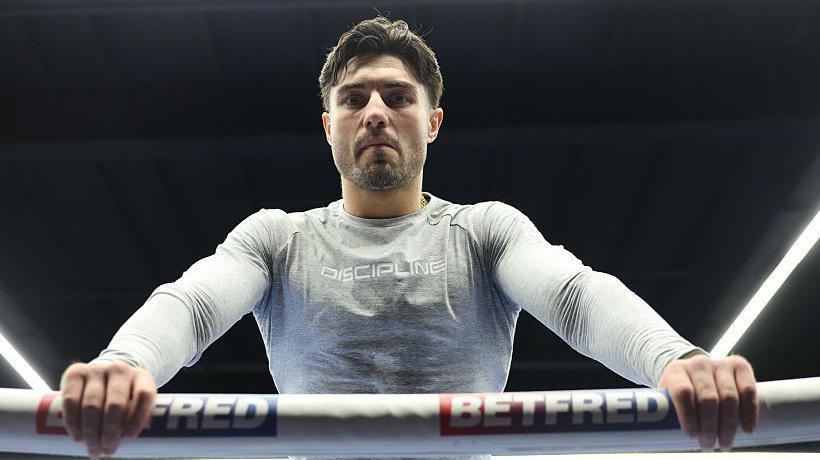
Josh Kelly has always presented as confident but looks can be deceiving.

In 2021, Kelly appeared to have the world at his feet as he prepared to face David Avanesyan for the European welterweight title.

Kelly was undefeated in 10 fights as a professional and had his sights set on the top tier of the division.

During that run, which included six stoppage wins, Kelly – nicknamed ‘Pretty Boy’ – caught the eye by dancing around the ring and taunting opponents.

But behind the scenes all was not well.

He was battling with chronic hypochondria – known formally as illness anxiety disorder – a condition that is characterised by an excessive, disabling fear of having a serious undiagnosed medical illness.

“I should have seen it coming even before that fight [against Avaneysan]” Kelly told BBC Sport.

“I used to go into fight week and have Lemsips stacked up – I’d have three or four a day and it was for no reason apart from thinking what if I get sick?

In pursuit of perfection, Kelly, who faces Bakhram Murtazaliev for the IBF light-middleweight world title in Newcastle on Saturday, was sabotaging his chances of success.

Anxiety around falling ill led to sleepless nights and Kelly recalls getting a “maximum of 11 or 12 hours” sleep during the entire week of the Avaneysan fight, which remains the only defeat of his career.

“One of the days when I was going to bed I looked at the mini bar, broke it open and got the two small bottles of whiskey to see if it would knock me out but it didn’t do much,” Kelly said.

“It wasn’t like I was chronic drinking but it was just trying to find anything to help.”

Kelly was unable to sleep the night before the fight and took desperate measures shortly before walking to the ring.

“To get out of the changing room I had seven shots of caffeine in the space of 10 or 15 minutes – I felt like my heart was racing but my head was somewhere else,” Kelly said.

“I’m normally laughing, smiling and in a good mood but if you watch that ringwalk you can see in my eyes that I was just somewhere else.

Bakhram Murtazaliev v Josh Kelly

‘Spinning out into other areas of my life’

Kelly represented Great Britain at the 2016 Olympics in Rio but lost against eventual gold medal winner Daniyar Yeleussinov in the last 16.

He turned professional the following year and spent the early stages of his career at welterweight before moving up to light-middleweight.

Now a father of two, Kelly, who welcomed his first son in 2018, admits parenthood further exacerbated his condition

“I have two young boys and I was always asking ‘does he need to wash his hands?, ‘does he need to do this or that?’ I wouldn’t touch certain things and wanted to put gloves on all the time,” Kelly said.

Friends, family and faith got Kelly back on track

Josh Kelly is held up in the air by Adam Booth with two of his training team stood either side on the outside of the ropes of a boxing ringGetty Images

Kelly took 16 months away from the ring after his loss against Avaneysan to address his condition.

He sought out some professional help but leant largely on friends, family and his faith to change his mentality.

“My friends helped but God helped a lot,” Kelly said.

“I spoke to certain people and eventually found this guy Steven Green who is a friend and mentor of mine now.

“I was on a Zoom call with him about property and he said he could help with my mindset in boxing. I didn’t believe it until we did some deep chatting and he opened my mind up.”

Kelly – trained by Adam Booth – marked his return with a stoppage victory against Peter Kramer and has excelled at domestic and European level.

Wins over current British and Commonwealth super-middleweight champion Troy Williamson and light-middleweight Commonwealth and British champion Ishmael Davis sent a clear signal of intent.

Now, on a seven-fight win streak, Kelly has been propelled to the world title stage and faces undefeated Russian Martazaliev for light-middleweight glory at the Utilita Arena.

“Boxing training is probably 90% physical and 10% mental but it flips the other way on fight night and I’ve got that nailed down,” Kelly said.

“I’m that strong mentally now that no one can come near that and I’m locked off. I don’t just believe it but I know it to be true.

“The time I had off was needed so I could sort myself out and fulfil my potential. Now I feel strong. I’m not cutting as much weight and I feel mature.

“Back then if you asked me whether I’d be competing for a world title now I would say you were crazy.

Related topics

  • Boxing
    • 20 hours ago
    Leigh Wood and Josh Warrington go head-to-head for a face-off
    • 28 April 2024
    Split image of Claressa Shields, Paddy Pimblett and Chris Eubank Jr

More boxing from the BBC

    • 16 August 2025
    BBC Sport microphone and phone

Iran’s president says Trump, Netanyahu, EU stirred tensions during protests

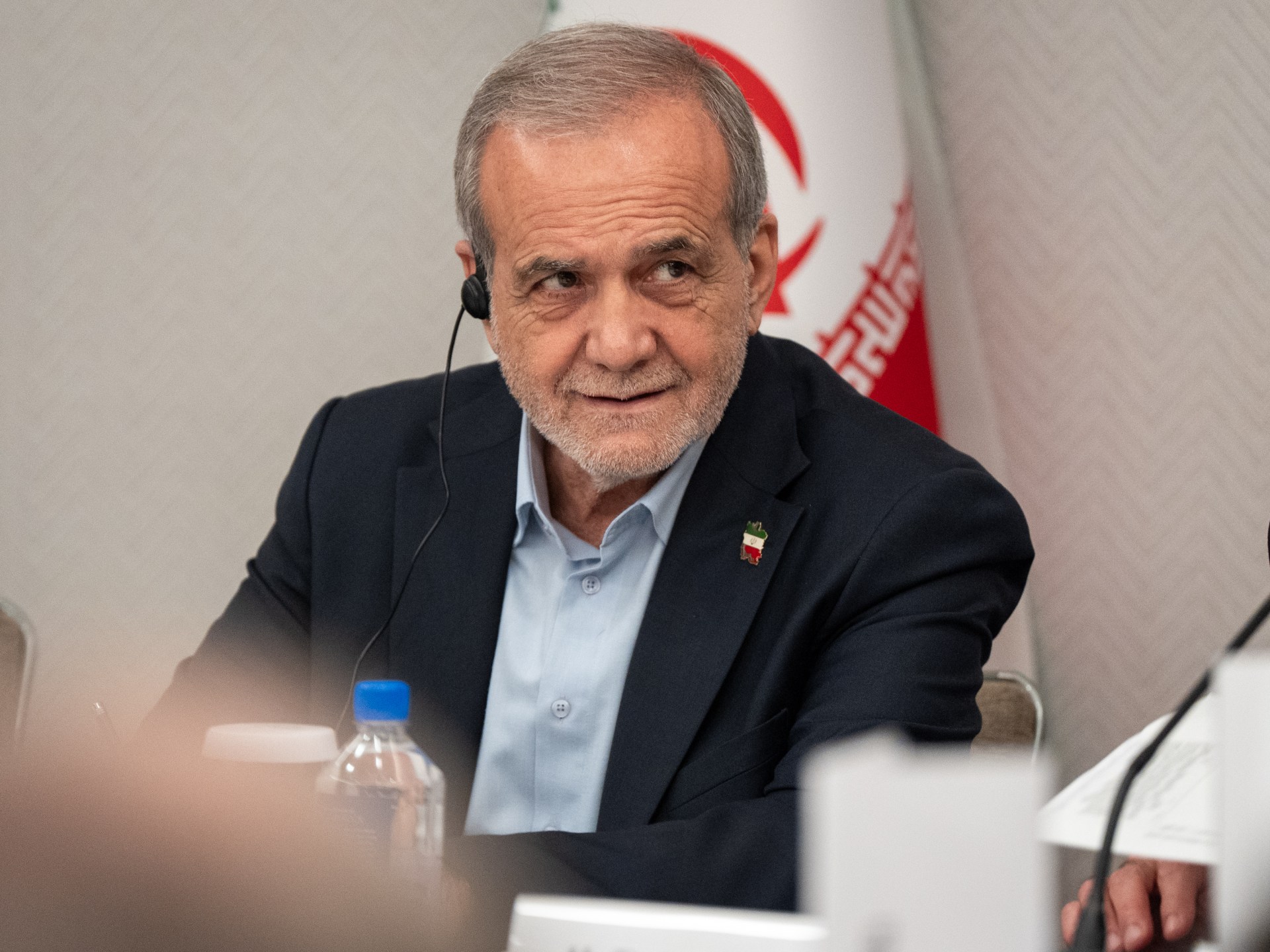
Iranian President Masoud Pezeshkian has said that United States President Donald Trump, Israeli Prime Minister Benjamin Netanyahu and Europe stirred tensions by “provoking” people during the recent protests that gripped the country.

“They equipped and brought a number of innocent people along with this movement and poured them into the streets and incited them to tear this country apart, create fights and hatred between people, and create division,” Pezeshkian said in a televised speech on Saturday, according to Iran’s official Student News Network.

Recommended Stories

list of 4 itemsend of list

“In any normal protest, they don’t pick up guns, they don’t kill military personnel, they don’t set fire to ambulances and markets, and we should sit with the protesters, listen to their words and concerns, and resolve them; we are ready to listen,” he added.

“Everyone knows that the issue was not just a social protest,” Pezeshkian said, claiming that the foreign powers “took advantage of our problems”, “provoked us” and “sought to divide our society”.

Iranian authorities acknowledge that thousands were killed during the recent protests, giving a toll of more than 3,000 deaths, but say the majority were members of the security forces or bystanders killed by “rioters”.

But rights groups warn the toll is likely far higher, with estimates in the tens of thousands.

For several weeks, Trump has been threatening to launch a military strike on Iran over its deadly protest crackdown earlier this month – protests Tehran repeatedly claimed were incited by foreign powers.

A US naval strike group has been in Middle Eastern waters since Monday, and Trump warned it was “ready, willing and able” to hit Iran “if necessary”.

Iranian Foreign Minister Abbas Araghchi said on Friday the country is ready for “fair and equitable” talks with the US, adding: “Iran has no problem with negotiations, but negotiations cannot take place under the shadow of threats.

“I should also state unequivocally that Iran’s defensive and missile capabilities – and Iran’s missiles – will never be the subject of any negotiations,” Araghchi said during a news conference alongside his Turkish counterpart, Hakan Fidan.

Separately on Friday, the US announced sanctions against Iran’s interior minister and other officials, over the incidents that took place during the protests.

Interior Minister Eskandar Momeni “oversees the murderous Law Enforcement Forces of the Islamic Republic of Iran (LEF), a key entity responsible for the deaths of thousands of peaceful protesters”, the US Department of the Treasury said in a statement about the measures.

Those sanctioned also included several high-ranking officers of the Islamic Revolutionary Guard Corps, as well as Iranian investor Babak Morteza Zanjani, who stands accused of having “embezzled billions in funds from the Iranian people”.

Suspected separatists kill 8 Pakistani policemen in ‘coordinated’ attacks

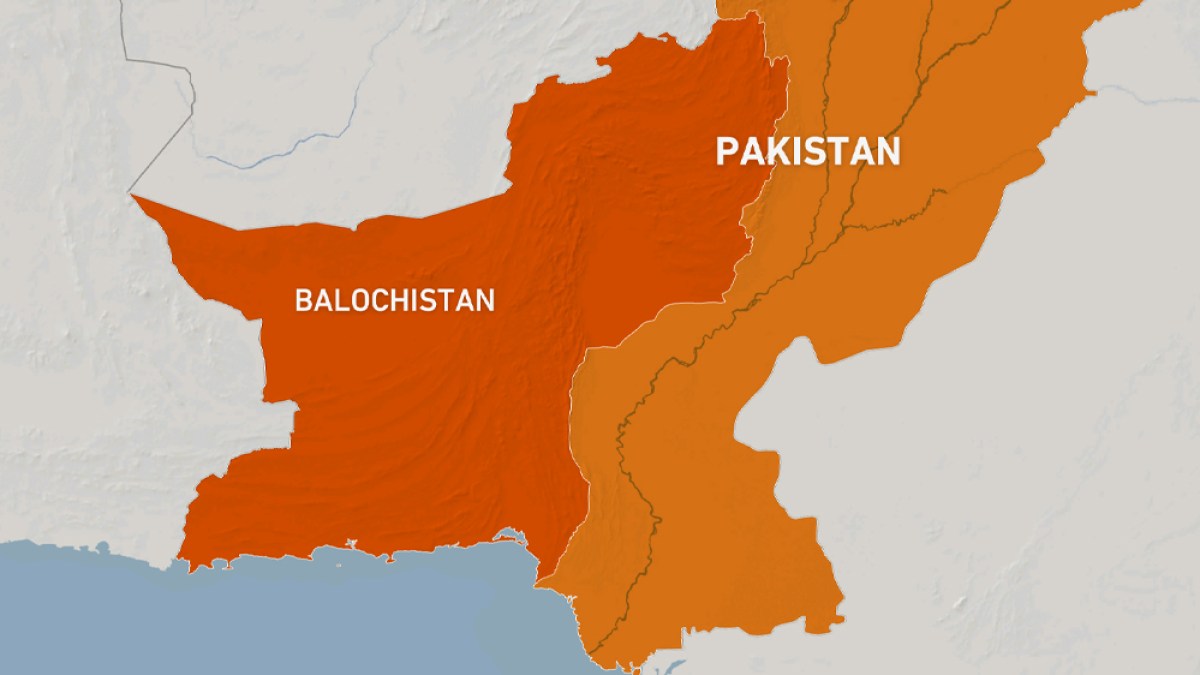
At least eight policemen have been killed by suspected separatists who launched “coordinated” attacks in multiple cities across Pakistan’s southwestern Balochistan province, officials said.

Several police stations in the provincial capital of Quetta were targeted by alleged ethnic Baloch gunmen in an attack that began at about 3am local time (01:00 GMT) on Sunday.

Recommended Stories

list of 4 itemsend of list

Pakistan has been battling a separatist movement in Balochistan for decades, where rebels target state forces, foreign nationals and non-locals in the mineral-rich southwestern province bordering Afghanistan and Iran.

“The coordinated gun and suicide attacks are being carried out across Balochistan, mainly in Quetta, Pasni, Mastung, Nushki and Gwadar districts,” a senior security official based in Quetta told the AFP news agency, speaking on condition of anonymity as he was not authorised to speak to the media.

The attacks “failed due to poor planning and rapid collapse under effective security response,” the official added, without commenting on the death toll.

Some members of the Pakistani security forces are reported to have been abducted. Internet and train services have been suspended, while a security operation is under way.

The Balochistan Liberation Army (BLA), the most active separatist group in the province, claimed responsibility for the attacks, AFP reported. The group claimed to target military installations and police and civil administration officials during gun attacks and suicide bombings.

The Pakistani government has not yet commented on the BLA’s claim.

Saturday’s attacks came a day after the military said it had killed 41 armed fighters in two separate operations in Balochistan, Pakistan’s poorest province, despite an abundance of untapped natural resources.

Baloch separatists have intensified attacks on Pakistanis from neighbouring provinces working in the region in recent years, as well as foreign energy firms they believe are exploiting the province’s riches.